Iran Regime Change Explained: Why the World Should Celebrate the End of Iran’s Islamic Republic
برای خوانندگان فارسی زبان
این مقاله حقیقت ۴۷ سال ظلم جمهوری اسلامی را بدون سانسور بازگو میکند. از اعدام های دسته جمعی تا فساد نفتی، از زندان اوین تا کشتار معترضان در خیابانها. جهان باید بداند و ما باید بگوییم بدون ترس، بدون سانسور، با نام و تاریخ. این صفحه را با دوستان خارجی تان به اشتراک بگذارید تا حقیقت به گوش جهانیان برسد.
Dear Iranian reader: please share this article in English the world needs to hear your story in a language they understand. Scroll down and read every word. Then share it.
Iran’s Islamic Republic has executed over 2,000 people in a single year, tortured political prisoners in Evin Prison, stolen oil revenues from 90 million citizens, and funded terrorist proxies across the Middle East for 47 years. Its collapse is not a political event it is a humanitarian necessity. The world should not just tolerate this change. The world should celebrate it.
Key Numbers
2,000+ | Executions in 2025 alone |
47 | Years of theocratic rule |
60% | Projected inflation 2026 |
31/31 | Provinces in active protest |
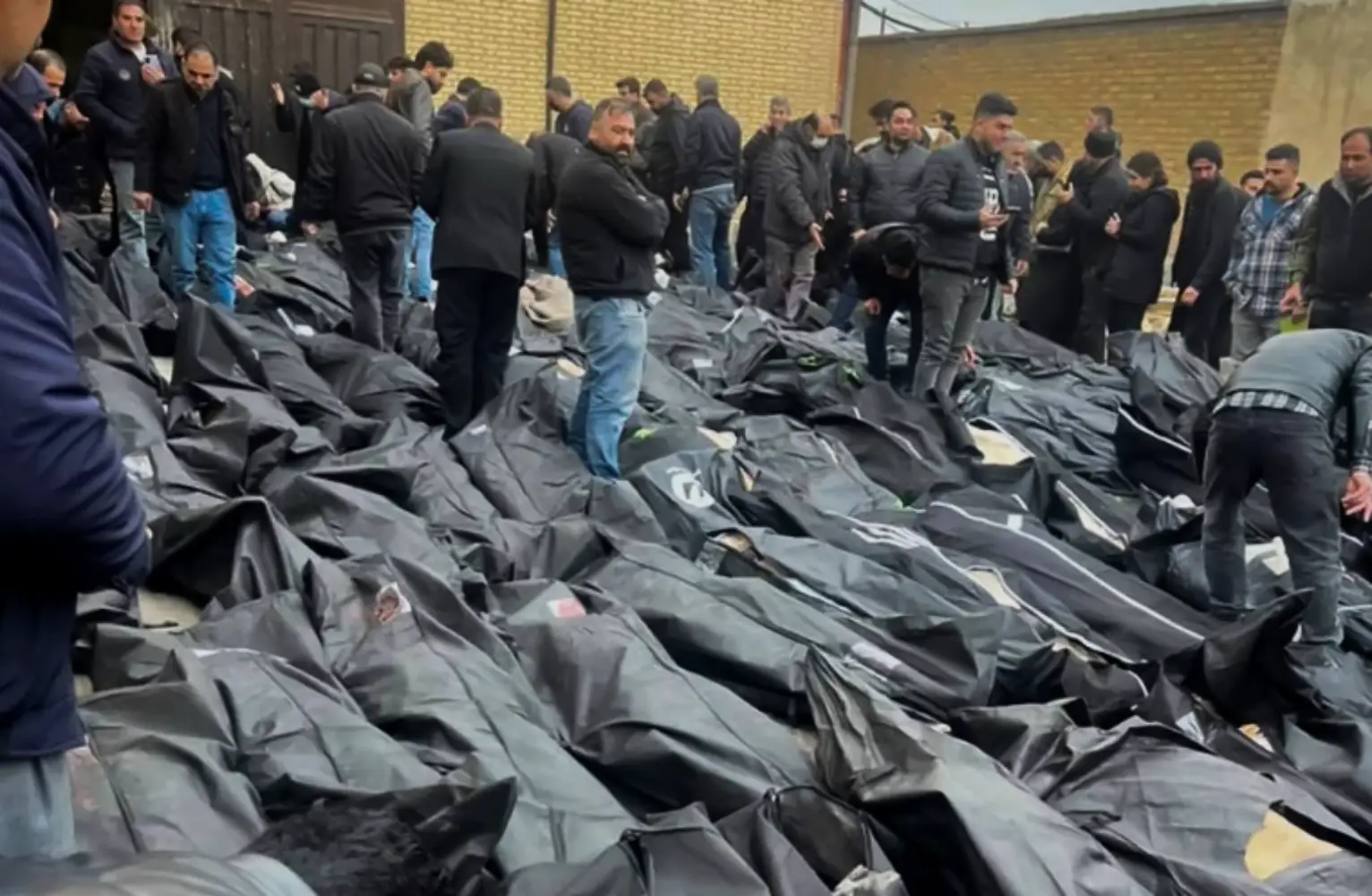
The Bloodiest Crackdown in 47 Years: Iran’s Uprising of December 2025 to Today
Every decade, the Islamic Republic has demonstrated that it is willing to kill its own people to survive. But what began on December 28, 2025 shattered every previous record of state violence in the history of the Islamic Republic and left the world searching for words adequate to describe what happened.
How It Started: An Economic Spark That Became a Political Firestorm
Protests erupted on December 28, 2025, following a sharp currency collapse, amid soaring inflation, chronic state mismanagement of essential services, and worsening living conditions. Starting with shop closures and strikes in Tehran’s Grand Bazaar, protests quickly spread nationwide.
Within days, what had begun as economic frustration transformed into something far more radical. Initially sparked by frustration over record-high inflation, food prices, and currency depreciation, the protests quickly evolved into a broader movement demanding the complete end of the Islamic Republic system itself. This event has been the largest uprising in Iran since the 1979 Islamic Revolution, spreading to more than 200 cities across the country.
The slogans in the streets no longer asked for reform. They demanded the fall of the entire system and they named the Supreme Leader directly.
January 8, 2026: The Day the Massacre Began
If December 28 was the spark, January 8, 2026 was when the Islamic Republic made its decision: to crush this uprising with maximum, indiscriminate force.
The authorities carried out massacres of protesters, primarily on January 8 and 9, when the death toll rose into thousands. January 2026 marks the deadliest period of repression by the Iranian authorities in decades of Amnesty International’s research.
Simultaneously, on January 25, The New York Times reported that Ali Khamenei himself ordered the crackdown “to crush the protests by any means necessary.” A senior government official was quoted as saying that security forces were given the green light to kill indiscriminately, including civilians, in order to “spread fear and deter further protests in Iran.” One member of the security forces said that the goal was to kill as many people as possible.
This was not a government losing control of its security forces. This was a government ordering its security forces to commit mass murder.
The Internet Blackout: Killing in the Dark
On January 8, 2026 the same day the massacres peaked the Islamic Republic implemented one of the most sweeping communications shutdowns ever recorded anywhere in the world. The near-total internet and telecommunications shutdown prevented the international witnessing of atrocities and caused anguish for families inside and outside of Iran unable to confirm their loved ones’ safety.
Doctors inside Iran communicated with the outside world through smuggled Starlink satellite terminals. Professor Amir Parasta, an Iranian-German eye surgeon and medical director of Munich MED, told The Sunday Times the data was gathered through doctors communicating via smuggled Starlink satellite terminals after internet access was cut on January 8. “This time they are using military-grade weapons,” Parasta was quoted as saying, adding that doctors were seeing gunshot and shrapnel wounds to the head, neck and chest.
Dr. Qassim Fakhraei, head of Tehran’s Farabi Eye Hospital, announced that 1,000 people came to the hospital with eye injuries during the December protests alone, suggesting hundreds may have suffered eye trauma from shotgun pellets aimed directly at faces. Several doctors and medical staff were detained in Tehran and other cities for treating injured protesters and refusing to cooperate with security officers.
The Death Toll: A Number the World Is Still Counting
The true scale of the killing may never be fully known because of the internet blackout. What the available evidence shows is a range of figures, each more devastating than the last:
The Islamic Republic’s own admission: On January 17, in a public speech, Ali Khamenei, the Supreme Leader, said “thousands of people” were killed. On January 21, Iran’s Supreme Council of National Security issued a statement that 3,117 people were killed during the uprising.
The UN’s assessment: On January 16, 2026, the UN Special Rapporteur on Iran, Mai Sato, said in a media interview that at least 5,000 people had been killed, noting that according to information she received from medical sources, the death toll might be as high as 20,000.
Iran International’s verified count: According to Iran International’s own confirmed list,fewer than 100 of those names appeared on the Islamic Republic’s official list, raising profound questions about how many deaths the government deliberately concealed.
The Canadian NGO estimate: On January 20, the Canadian NGO International Centre for Human Rights stated an estimate of 43,000 deaths from the protests, based on its comprehensive review of images, videos, received reports, interviews with a credible source within Iran’s public health system, additional independent sources, and further documentation review.
Medical sources inside Iran: Dr. Hashim Moazenzadeh, a surgeon in France who maintains regular contact with medical and hospital sources inside Iran, told Euronews Farsi that at least 22,000 deaths have been recorded in forensic facilities based on information from various hospital sources. Evidence showed security forces shot people who were fleeing, with images revealing bullet entry and exit wounds through the back of victims’ heads.
The arrests: HRANA stated on February 9 that 51,790 people had been arrested, while Iran International added that many are facing serious charges. Reports also indicated detained protesters were being brutally tortured and raped before being killed in prison, including women’s bodies being returned to their families with missing organs in order to hide the crimes.
One Iranian woman speaking from exile said: “There is every family now in Iran that knows a few people who were killed. Honestly, it’s not easy to talk about it. As a human being, we haven’t been designed for this.”
Source: Iran International
The Executions Continue
The killing did not stop when the streets were cleared. The Islamic Republic moved its executions from the streets into the courts.
On February 20, another seven protesters including a 19-year-old were sentenced to death. On March 19, three more protesters were executed, including teenage wrestler Saleh Mohammadi. On April 2, another protester, 18-year-old Amir Hossein Hatami, was executed. On April 5, two more protesters were executed.
These are not statistics. These are children.
The Diaspora Rises: Iran’s Voice from the Outside
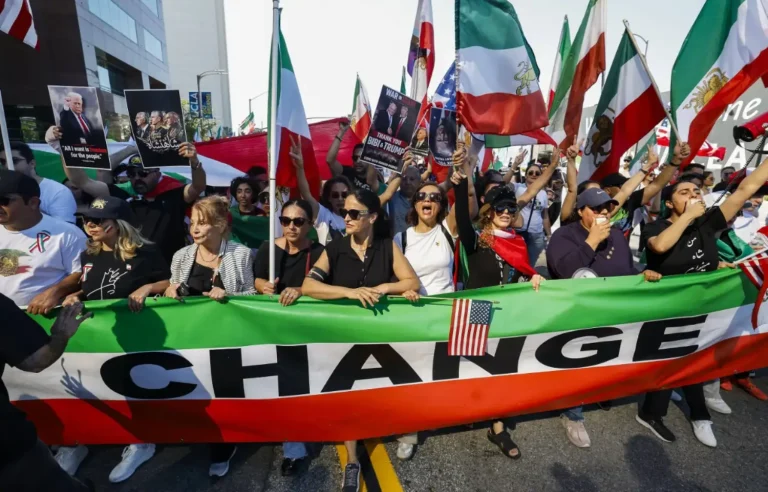
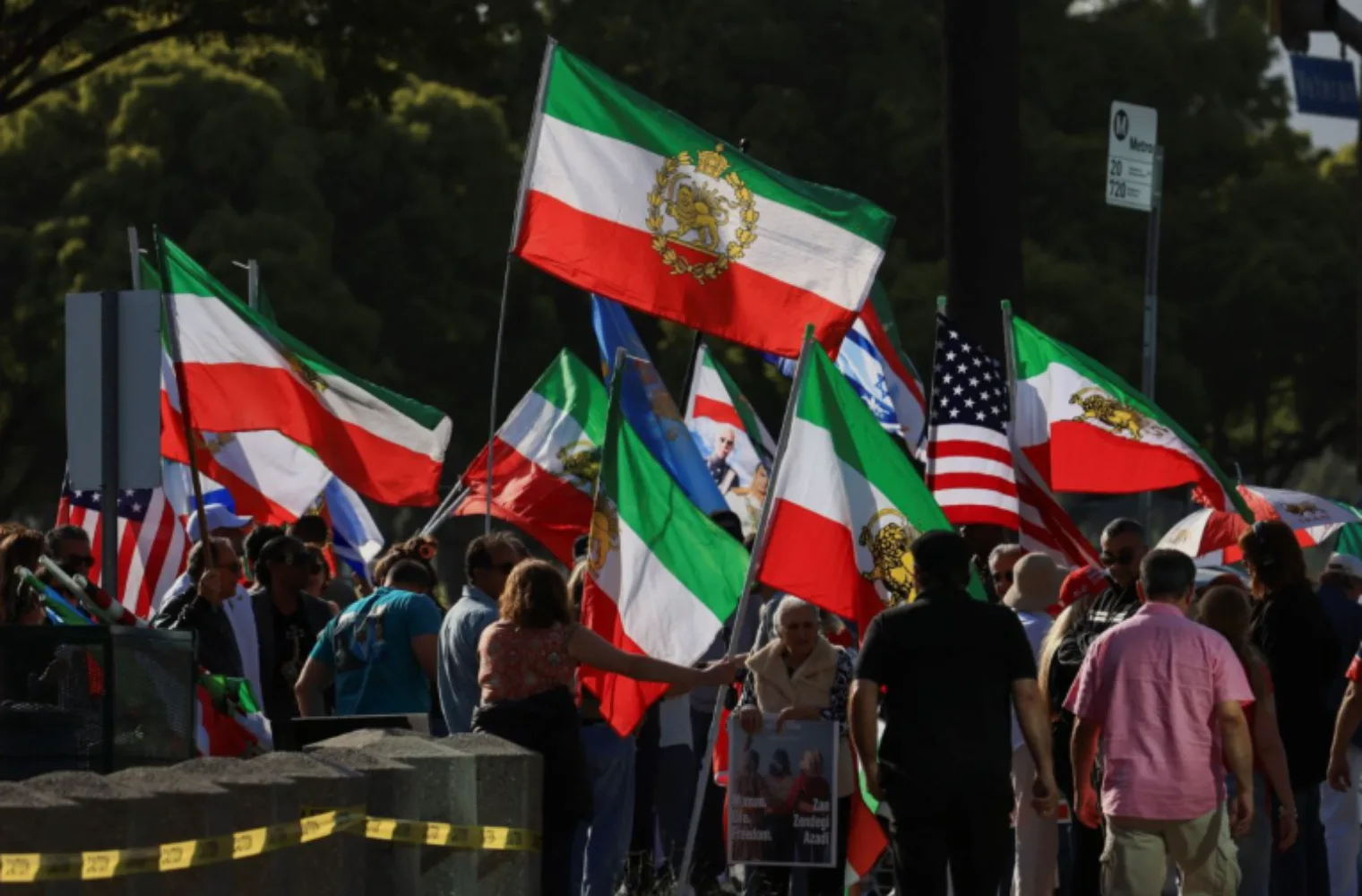
While the internet blackout silenced millions inside Iran, the global Iranian diaspora refused to be silent. Mass demonstrations took place across Europe, the United States, Canada, and Australia — in London, Los Angeles, Toronto, Berlin, Paris, and Stockholm. Iranians who had fled the Islamic Republic decades ago stood shoulder to shoulder with those who had left in the last few years, united by the same grief and the same demand: that the world bear witness and refuse to look away.
The diaspora served a critical function — keeping the story alive in international media during weeks when almost no information was escaping from inside Iran, and sustaining political pressure on Western governments to respond.
What the Numbers Tell Us
Every figure in this section carries a moral weight that goes beyond data. The Islamic Republic’s own Supreme Leader acknowledged that thousands were killed. The United Nations says the real number could reach 20,000. Independent Canadian researchers put it at 43,000. Iran International has verified over 6,600 names individually.
Due to the ongoing internet shutdown, the scale of mass killings that took place and the Iranian authorities’ well-documented pattern of carrying out reprisals against families of victims who speak out, the true number of those killed is likely higher.
What is not in dispute — confirmed by Amnesty International, Human Rights Watch, the United Nations, and the Islamic Republic’s own statements — is that the government of Iran ordered its security forces to open fire on its own people with military-grade weapons, shut down all communications to hide what it was doing, and then began executing survivors in its courts.
That is not governance. That is a government at war with its own nation.
Why Does Iran Execute So Many People? 2,000+ Deaths in 2025 Alone
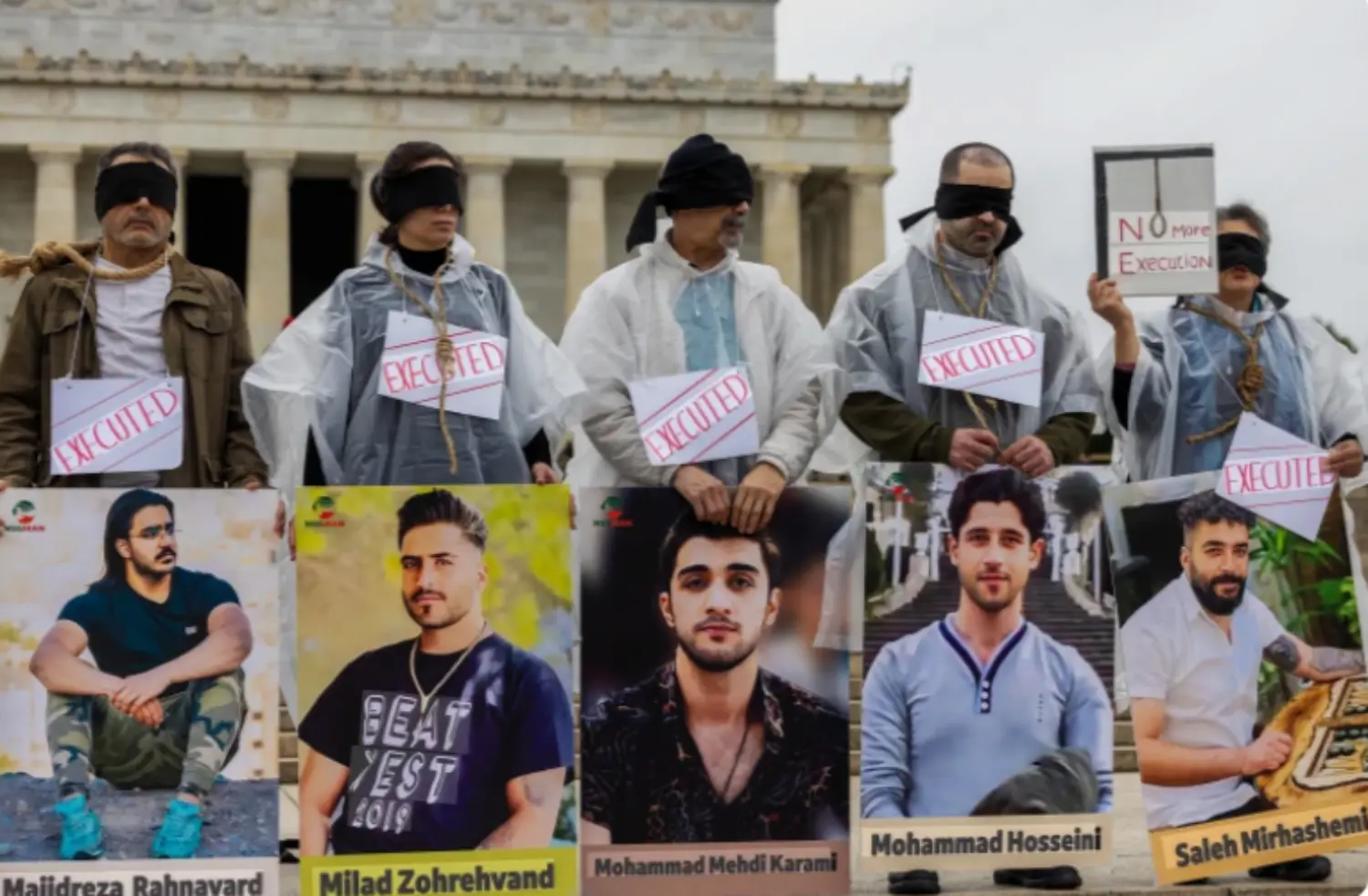
This is one of the most searched questions about Iran — and its answer reveals the true nature of the Islamic Republic.
In 2025, Iranian authorities carried out over 2,000 executions — the highest number recorded since the late 1980s massacres. according to Human Rights Watch’s World Report 2026. More than half were for drug-related offenses, which under international law cannot justify the death penalty.
A key insight often overlooked: the regime uses drug charges as a legal cover to eliminate political opponents, ethnic minorities, and dissidents. Many of those executed had no meaningful access to legal representation.
- At least 13 men — including three Kurdish men — were executed on accusations of “espionage” or connections with Israel
- On June 11 and September 6, 2025, two men were executed directly in connection with the Woman, Life, Freedom protests
- The UN’s Independent Fact-Finding Mission confirmed the regime committed crimes against humanity in connection with the 2022 protests
- Iran’s judicial system has been described as “a weapon for suppression” — particularly targeting Baha’is, Kurds, Arabs, and Baluchis
- Over 750 documented cases of persecution of Baha’is in just five months of 2025
The Pattern Is Clear: The Islamic Republic does not execute criminals. It executes people who threaten its grip on power — and labels them criminals to justify it. This is the definition of a regime that governs through terror.
What Happens to Protesters in Iran? The Answer Is Evin Prison
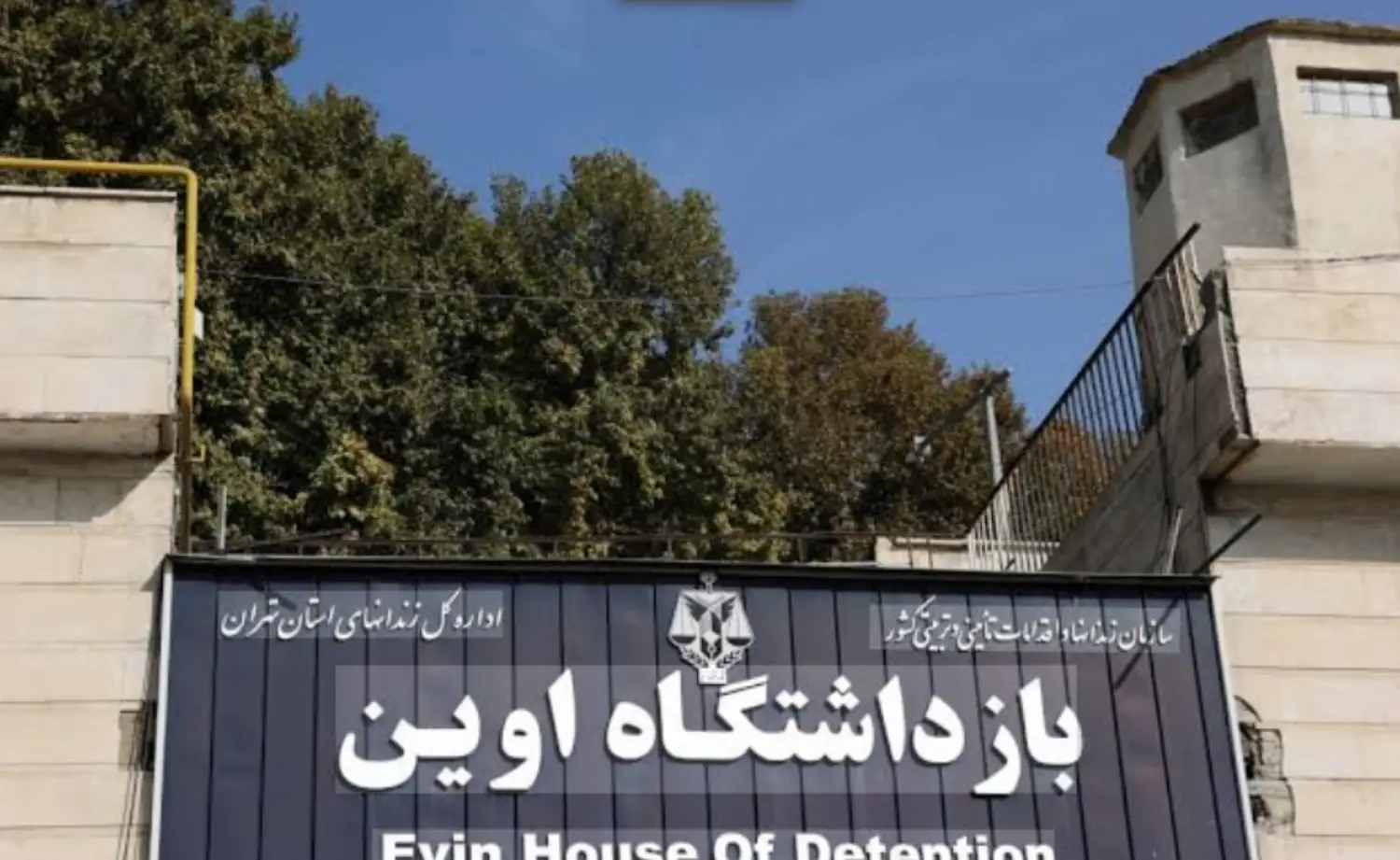
When Iranians take to the streets — whether in 2009, 2019, 2022, or 2025 — the regime’s response follows the same pattern: arrest, disappear, torture, and execute.
Evin Prison in Tehran is the regime’s most notorious instrument of repression. It is not a prison by any civilized standard. It is a facility specifically designed to break political opponents through systematic torture, solitary confinement, and psychological destruction.
What Happens Inside Evin Prison
- Detainees are held in prolonged solitary confinement — sometimes for months — with no legal access
- Torture methods include stress positions, sleep deprivation, beatings, and psychological abuse to extract forced confessions
- Prisoners are forced to confess on camera — confessions later broadcast on state television as “evidence”
- On June 23, 2025, Iranian authorities used the chaos of an external attack on Evin to forcibly disappear and ill-treat already imprisoned detainees — turning a crisis into another opportunity for internal repression
- Families are routinely denied information about their loved ones’ locations, health, or charges— a pattern of enforced disappearance documented in detail by Human Rights Watch, affecting tens of thousands of detainees since December 2025.
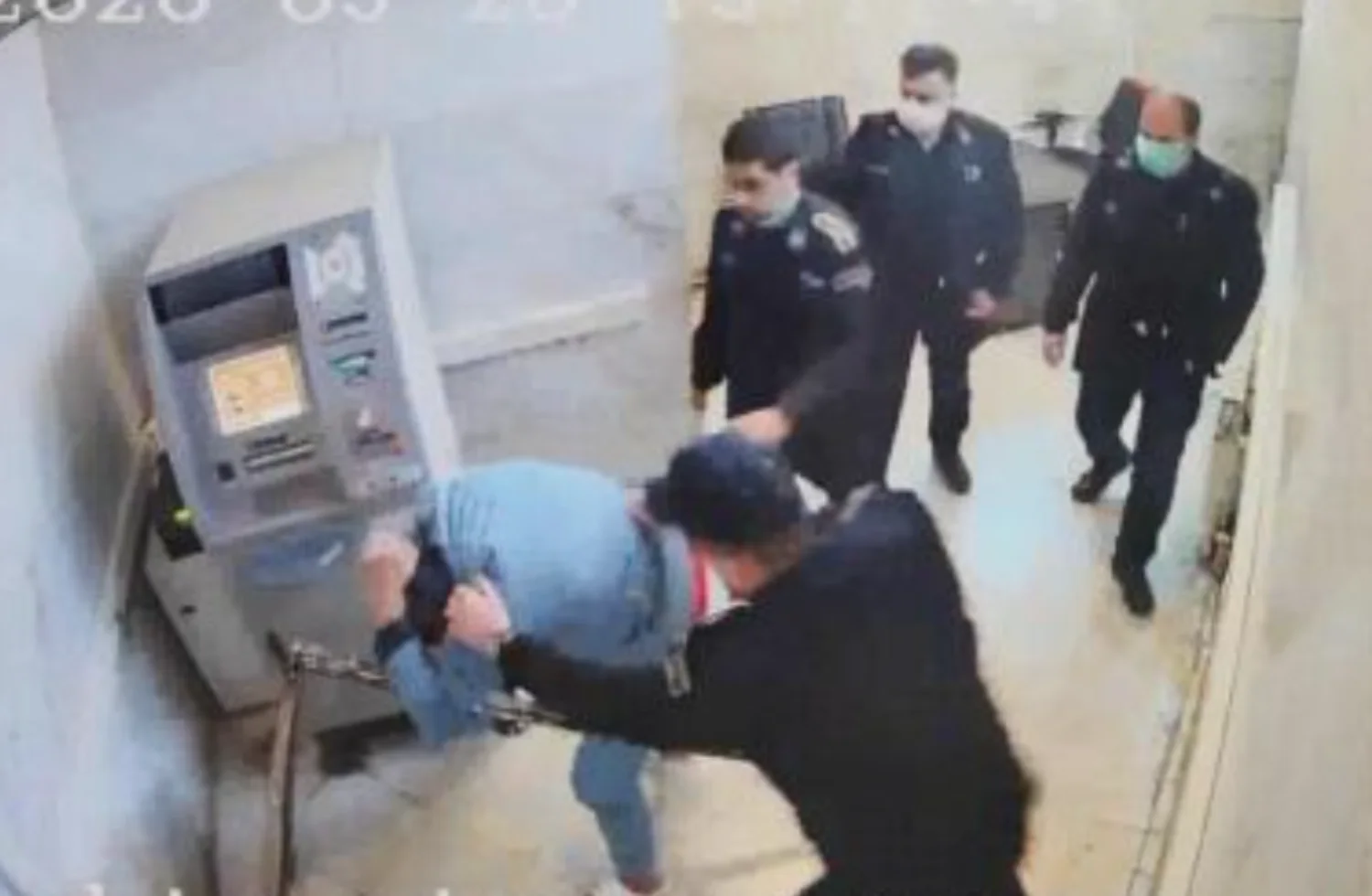
What Happens Inside Evin Prison
In our observation of the available documented evidence, the most disturbing pattern is this: the regime does not just imprison protesters — it uses their imprisonment to send a message to every Iranian family. The message is: “This will happen to your child too.”
Women’s Rights in Iran: Gender Apartheid, Not Just a Dress Code
Mahsa Amini’s Death Explained — And Why It Changed Everything
In September 2022, 22-year-old Mahsa Amini was arrested by Iran’s “morality police” for allegedly wearing her hijab improperly. Within days, she was dead — with official claims of a “heart attack” contradicted by her family, eyewitnesses, and forensic evidence of head trauma.
Her death ignited the Woman, Life, Freedom movement — the most significant uprising in Iran’s modern history.
But what the world must understand is this: Mahsa Amini was not an isolated tragedy. She was the visible face of a system of gender apartheid that the Islamic Republic has enforced for 47 years.
What the Regime Does to Women | Legal Basis | Punishment |
Forced hijab in all public spaces | Mandatory since 1983 | Arrest, flogging, prison |
Banned from attending sports events | Regime decree | Arrest if attempting entry |
Requires husband’s permission to travel | Civil law | Denied passport |
Half the inheritance rights of men | Sharia-based civil code | Systemic poverty |
Testimony worth half of a man’s in court | Judicial code | Institutional injustice |
Minimum marriage age: 13 years | Civil code | Child marriage normalized |
A key insight often overlooked in Western coverage: the hijab law is not about clothing. It is a control system.
The Woman, Life, Freedom movement did not end with Mahsa Amini. When protests erupted again in December 2025, security forces once more opened fire on crowds — Amnesty International confirmed that rifles and shotguns were used against largely peaceful protesters, killing dozens within days, including children.
Where Does Iran’s Oil Money Go? Not to the 60% Living in Poverty
Iran sits on the world’s second-largest proven natural gas reserves and the fourth-largest oil reserves. By any economic logic, Iranians should be among the most prosperous people in the Middle East.
Instead, the World Bank’s Iran economic outlook projects inflation rising toward 60% in 2026 and economic contraction for two consecutive years — while the regime continues funding proxy wars across four countries.
Where does the money go? In our market observations, the answer follows three channels:
Channel 1: The IRGC’s Business Empire
The Islamic Revolutionary Guard Corps (IRGC) controls an estimated 40–50% of Iran’s entire economy — including construction, telecommunications, energy, banking, and import-export monopolies. This is not a military force. It is a mafia with uniforms and missiles.
Channel 2: Proxy Warfare Across the Middle East
- Hezbollah in Lebanon: Iran funds it to the tune of an estimated $700 million per year
- Hamas in Gaza: hundreds of millions in weapons, training, and intelligence support
- Houthi forces in Yemen: funding, drone technology, and ballistic missiles
- Shia militias in Iraq and Syria: billions in funding over two decades
While Iranian teachers, nurses, and factory workers went on strike for unpaid wages, the regime was funding wars in four countries simultaneously.
Channel 3: The Nuclear Program
Estimates place the total cumulative cost of Iran’s nuclear program — including enrichment facilities, missile programs, and related military infrastructure — in the tens of billions of dollars. Every rial of that money came from a population experiencing 60% inflation and mass unemployment.
The Core Truth About Iran’s Economy: Iran is not poor because of sanctions alone. Iran is poor because its government made a deliberate choice: guns, proxies, and nuclear weapons over schools, hospitals, and salaries. Sanctions tightened an already broken system — they did not create it.
47 Years of Islamic Republic Iran: A Timeline of Crimes
Period | Crime Against the People | Scale |
1979–1981 | Mass execution of political opponents from all parties | Thousands killed |
1988 | Secret massacre of political prisoners — mass graves | Est. 5,000–30,000 killed |
2009 | Green Movement crushed — protesters shot in streets | Dozens killed, thousands imprisoned |
2019 | Bloody November — security forces fire on protesters | Est. 1,500+ killed in days |
2022–2023 | Woman Life Freedom uprising — Mahsa Amini and hundreds killed | 500+ killed, 20,000+ arrested |
2025 | Record executions — 2,000+ in single year | Highest since 1988 |
2025–2026 | Nationwide protests in all 31 provinces amid economic collapse | Ongoing |
Iran Islamic Republic Collapse: Why the World Should Not Fear It
A common concern heard in diplomatic circles is this: “What comes after?” Experience has shown that this question — while legitimate — is too often used as an excuse for inaction and silence.
The implicit argument is: “The regime is terrible, but regime change is risky.”
This argument has been used to justify 47 years of silence while Iranians were executed, tortured, and impoverished.
The reality is that what comes after the Islamic Republic cannot — by any objective measure — be worse for the Iranian people than what has existed for 47 years. A population that is educated, young, connected to the world, and deeply tired of theocracy does not need Western tutoring about democracy. It needs the world to stop legitimizing the people who have oppressed it.
“Many Iranian people are no longer afraid of this regime — a significant psychological shift coinciding with widespread social defiance, particularly among younger Iranians and women.” — Iran International, 2026
FAQ
Q: What is Iran’s regime change and why does it matter globally? Iran regime change refers to the end of the Islamic Republic — the theocratic government that has ruled Iran since 1979. It matters globally because Iran’s regime funds terrorist proxies across the Middle East, pursues nuclear weapons, controls a critical oil-producing region, and oppresses 90 million people. A stable, democratic Iran would transform the entire Middle East security landscape for the better.
Q: How many people has the Iranian regime executed since 1979? Reliable estimates suggest tens of thousands of executions since 1979, including the 1988 prison massacres where an estimated 5,000 to 30,000 political prisoners were secretly killed and buried in mass graves. In 2025 alone, over 2,000 executions were recorded — the highest annual figure in decades.
Q: What happened to Mahsa Amini and why is it important? Mahsa Amini was a 22-year-old Kurdish-Iranian woman arrested in September 2022 by Iran’s morality police for allegedly wearing her hijab incorrectly. She died in custody within 72 hours, with evidence of head trauma. Her death sparked the Woman, Life, Freedom uprising — the largest protest movement in Iran’s post-1979 history, resulting in over 500 deaths and 20,000+ arrests.
Q: Why do Iranian protesters keep rising up despite brutal crackdowns? Because the combination of economic collapse, systematic repression, and generational change has crossed a threshold that no amount of state violence can reverse. Over 60% of Iran’s population was born after the 1979 revolution and has no ideological loyalty to the Islamic Republic. A key psychological shift has occurred: they are no longer afraid.
Q: What can the international community do to support the Iranian people? First: stop treating the Islamic Republic as a legitimate representative of the Iranian people. Second: maintain targeted sanctions on IRGC leadership while ensuring ordinary Iranians can access financial services. Third: amplify Iranian voices rather than only engaging with regime diplomats. Fourth: hold regime officials accountable at the International Criminal Court for documented crimes against humanity.
“Continue Reading”
Why Iranians Are Celebrating Their Supreme Leader’s Death
Revolutions in Iran: Chaos, Crisis, and Lost Freedoms
2026 Strait of Hormuz Crisis: Is It Closed Today, When Will It Open, and What It Means for the World
Persian Business Directory – Your Gateway to Top Persian Businesses
The world needs to know the truth about Iran. Share this article. Translate it. Post it. The Iranian people have been speaking for 47 years — it’s time the world listened in a language it understands.