
Iranian Business Directory
Persian Culture: Traditions, Art, Language, and Heritage
Persian Culture
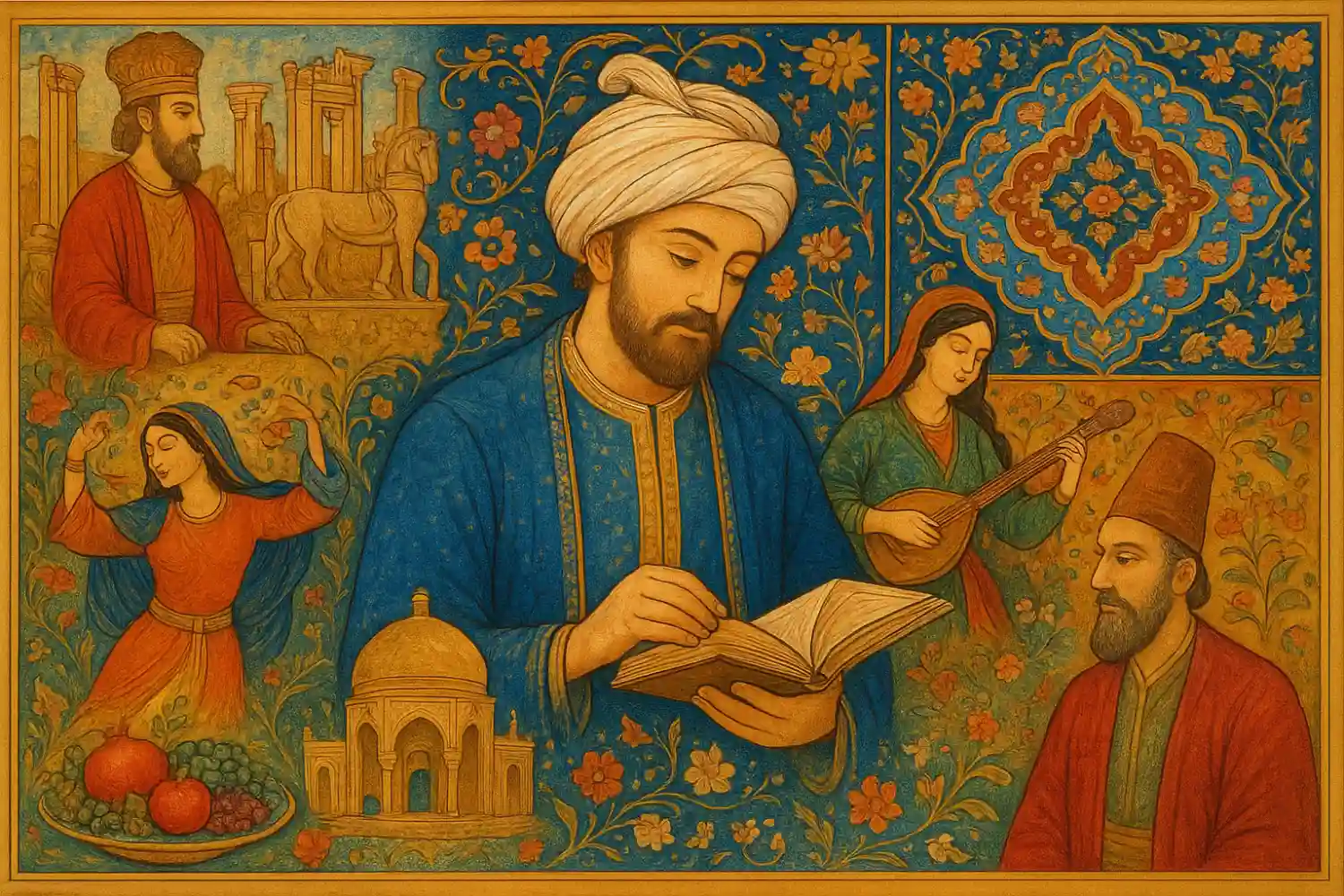
Quick Answer: Persian culture is the shared heritage of the Iranian people, rooted in more than 2,500 years of continuous civilization. It is defined by its poetry and literature, distinctive art and architecture, the Persian language (Farsi), celebrated cuisine, and social values such as hospitality and ta’arof — a refined code of politeness. Persian culture blends pre-Islamic traditions, including Nowruz and Yalda Night, with later Islamic influences, and today thrives both in Iran and across a global diaspora.
Few cultures carry the depth and continuity of Persian culture. From the stone columns of Persepolis to the verses of Rumi and Hafez still quoted at family gatherings, Persian civilization has shaped art, science, language, and philosophy across the Middle East and far beyond. This guide covers the history, traditions, art, language, food, and modern life of one of the world’s oldest living cultures — including how it thrives today in Iranian-American communities across the United States.
Persian, Iranian, or Farsi — What’s the Difference?
These three terms are often used interchangeably, but they aren’t identical. Understanding the difference is the first step to understanding the culture itself.
Term | What it refers to | Correct usage |
Persian | The dominant ethnic group and historical civilization of Iran; also the English name of the language | “Persian culture,” “Persian rugs,” “Persian poetry” |
Iranian | Nationality — anything relating to the modern country of Iran and all its ethnic groups (Persians, Azeris, Kurds, Lurs, Baloch, and others) | “Iranian citizen,” “Iranian cinema,” “Iranian-American” |
Farsi | The native (endonym) name of the Persian language | “She speaks Farsi” — the language, never the culture |
In short: Iranian culture is the broader national umbrella, Persian culture is its largest and most historically influential thread, and Farsi is the language that carries both. On this page, we use “Persian culture” in its widest traditional sense.
What Is Persian Culture?
Persian culture encompasses the customs, language, arts, and social values that originated in Persia — the historical name for modern-day Iran. It is one of the world’s oldest continuous cultures, tracing its roots to the ancient kingdoms of the Iranian plateau.
At its core, Persian culture values:
- Artistic expression through poetry, painting, calligraphy, and music
- Social grace, embodied in ta’arof, the art of courteous exchange
- Knowledge and wisdom, celebrated through literature and philosophy
- Hospitality, where a guest is treated as a gift
- Spiritual depth, reflected in both Zoroastrian heritage and Sufi thought
To understand Persian culture is to see how history, art, and everyday life intertwine — where a cup of tea is an act of connection and a single line of poetry can settle an argument.
A Brief History: The Ancient Persian Empire
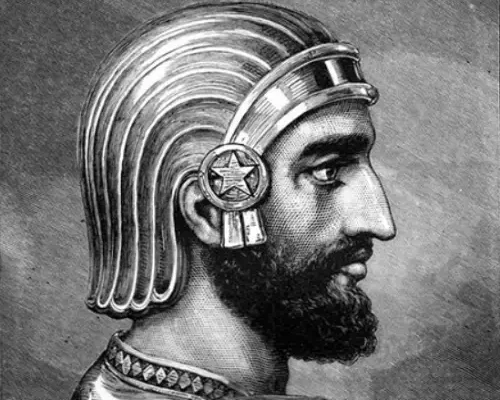
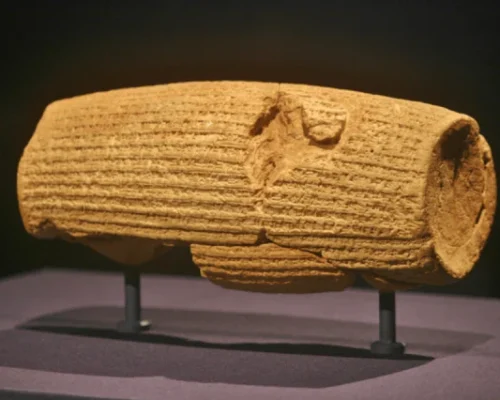
The story begins with the Achaemenid Empire (550–330 BCE), founded by Cyrus the Great — one of the largest empires the ancient world had ever seen, spanning parts of three continents from the Indus Valley to Greece and Egypt. Cyrus is remembered not only as a conqueror but as an unusually tolerant ruler: subject nations kept their languages, religions, and customs. His legacy survives in the Cyrus Cylinder, a clay artifact often described as one of history’s earliest declarations of human rights — a characterization historians still debate, but one that reflects the values Persians associate with their founding king.
Under Darius the Great, the empire pioneered systems the modern world still recognizes: provincial governance through satrapies, standardized coinage, and the Royal Road, a courier network stretching roughly 2,700 kilometers from Sardis to Susa. Its relay riders — the Chapar system — could carry a royal decree across the empire in days.
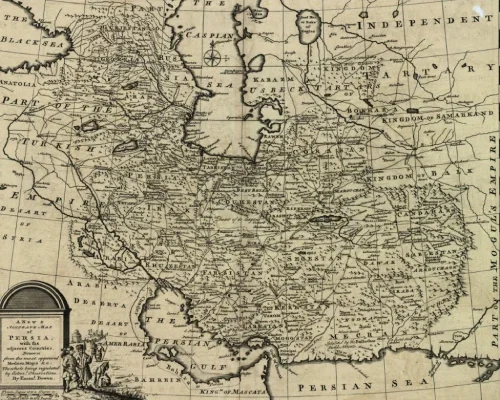
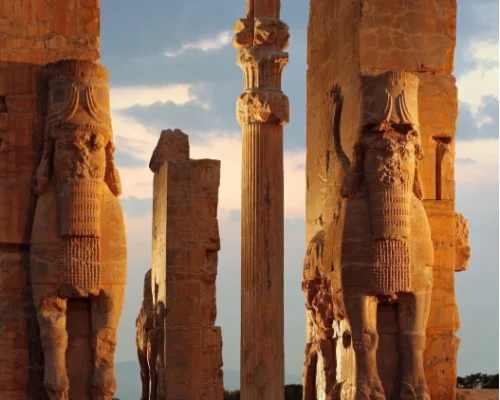
Persepolis, the ceremonial capital, remains the era’s masterpiece: towering columns, grand staircases, and bas-reliefs of delegates from twenty nations bringing tribute. After Alexander’s conquest in 330 BCE, Persian statecraft and art lived on through the Parthian (247 BCE–224 CE) and Sassanian (224–651 CE) dynasties, deeply influencing Byzantine, Islamic, and eventually European civilization.
Persian Art and Architecture
Persian art seeks the divine through detail and harmony. Miniature painting reached its height under the Timurid and Safavid dynasties, rendering scenes of love and mythology in jewel-like precision. Persian calligraphy — especially the flowing Nastaliq script — remains among the most elegant writing systems ever devised.
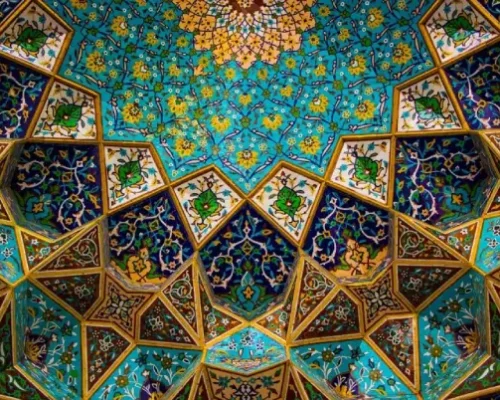
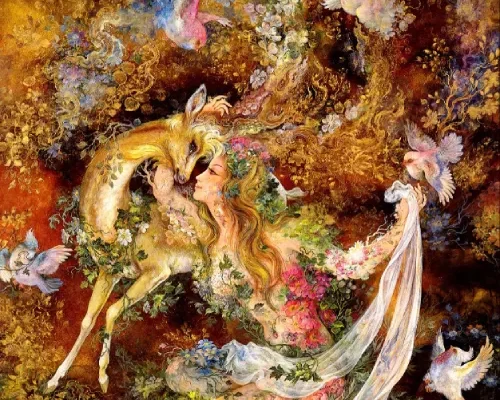
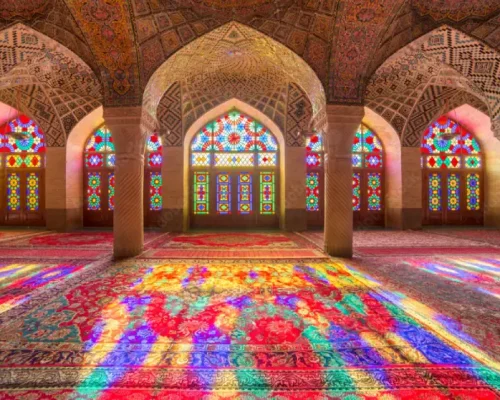
Architecture is Persia’s most visible legacy. Persepolis and Pasargadae defined monumental symmetry in the ancient world; the turquoise-domed mosques of Isfahan and Shiraz perfected geometric and spiritual design in the Islamic era. Three signatures recur throughout:
- Domes symbolizing the heavens
- Blue and turquoise tilework representing purity and eternity
- The Persian garden (charbagh) — a fourfold layout representing paradise, which later influenced the gardens of India’s Taj Mahal
And no symbol travels further than the Persian rug. Hand-woven over months or years in centers like Tabriz, Isfahan, Kashan, and Qom, each carpet encodes its region’s patterns and its weaver’s story — art you can live on.
The Persian Language (Farsi)
Persian, known natively as Farsi, is one of the world’s oldest living languages. A member of the Indo-European family, it is spoken today by more than 110 million people across Iran, Afghanistan (as Dari), and Tajikistan (as Tajiki), and has enriched Urdu, Turkish, and Hindi along the way.
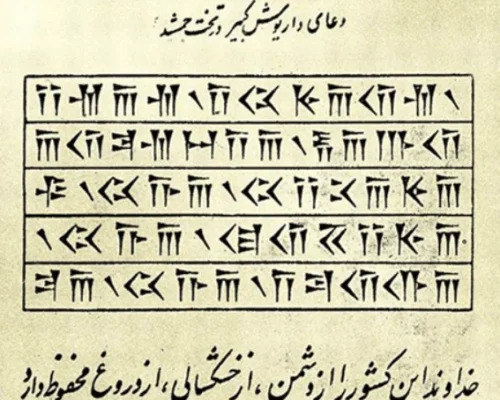
The language evolved in three stages: Old Persian, carved in cuneiform on the monuments of the Achaemenid kings; Middle Persian of the Sassanian era; and the modern Farsi that has served as the language of poetry and diplomacy for over a millennium.
Old Persian Cuneiform: The First Persian Script
The earliest Persian writing survives as wedge-shaped cuneiform inscriptions on stone monuments and clay artifacts like the Cyrus Cylinder — royal decrees, victories, and prayers recorded 2,500 years ago. Historians and designers still use digital recreations of this script to connect modern audiences with the origins of written Persian.
Persian Literature: The Crown Jewel
No culture places poetry closer to the heart of its identity. Ferdowsi’s Shahnameh (Book of Kings) preserved Persian mythology and the language itself in 50,000 verses. The mystical poetry of Rumi, the lyric genius of Hafez, the wisdom of Saadi, and the quatrains of Omar Khayyam have been translated worldwide, influencing thinkers from Goethe to Emerson.
Persian poetry is not a museum piece. Iranians still open Hafez for guidance (fal-e Hafez), quote Saadi in conversation, and recite poetry at Nowruz tables. In Persian culture, a poem is a living tool for daily life.
Persian Traditions and Social Values
Persian culture and traditions revolve around family, respect, and celebration. Hospitality sits at the center of daily life: guests are greeted with tea, sweets, and genuine warmth, and refusing a host’s third offer is practically impossible.
The most distinctive social custom is ta’arof — a sophisticated etiquette of offers, polite refusals, and ritual modesty. A shopkeeper may initially decline payment; a guest may refuse food twice before accepting. Ta’arof is not insincerity — it is a way of honoring the other person’s dignity in every exchange.
Respect for elders, modesty in behavior, and collective harmony complete the picture. Ceremonies from birth to marriage blend ancient Zoroastrian elements with Islamic practice, producing rituals that celebrate both heritage and faith.
Persian Traditional Dress
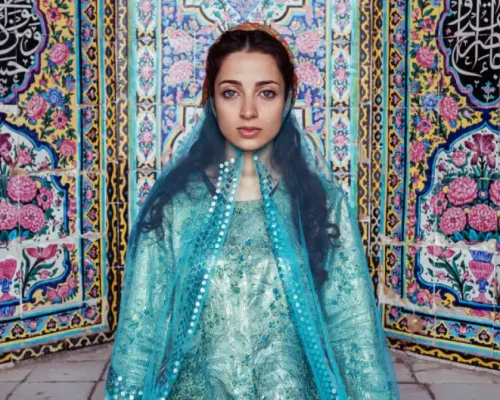
Persian clothing reflects both elegance and regional diversity. Traditional Persian dress varies by region, but it’s often colorful, modest, and intricately designed.
Women traditionally wear long dresses with scarves or veils, often decorated with embroidery or jewelry. Men may wear tunics, vests, and wide trousers, sometimes complemented by felt hats or belts.
Although modern Iranian fashion has evolved, traditional clothing is still proudly worn during festivals, weddings, and cultural events. It represents both heritage and creativity — a living symbol of Persian identity.
Traditional Persian Food
Persian cuisine is a celebration of balance — sweet with sour, hot with cold. Staples include kabob koobideh, ghormeh sabzi, fesenjan (pomegranate-walnut stew), and tahdig, the golden crispy rice every Iranian family competes over. Saffron, fresh herbs, pomegranate, and yogurt define the palette.
Meals are shared family-style, and offering food is an act of love. To taste it yourself, explore authentic Persian cuisine or find a Persian restaurant near you in our directory.
Persian Holidays and Celebrations
Holiday | When | What it celebrates |
Nowruz | Spring equinox (March 20–21) | Persian New Year — rebirth and renewal, celebrated for some 3,000 years; inscribed on UNESCO’s Intangible Cultural Heritage list and recognized by the UN |
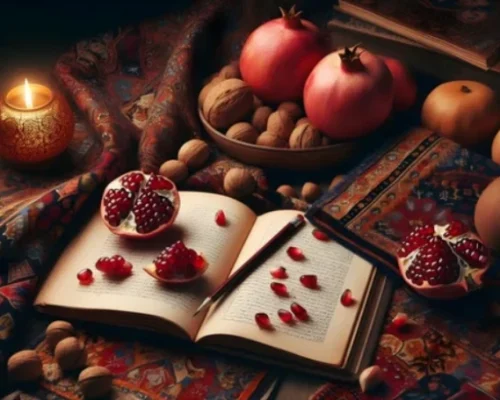
Yalda Night | Winter solstice (Dec 20–21) | The longest night — family gatherings with pomegranates, watermelon, and Hafez poetry, symbolizing light overcoming darkness |
Mehregan | Early October | Ancient festival of friendship, love, and gratitude honoring Mithra, the pre-Islamic divinity of light and covenant |
Chaharshanbe Suri | Last Tuesday eve before Nowruz | The fire festival — jumping over flames to leave sickness behind and enter the new year purified |
These celebrations pre-date Islam by centuries and remain the strongest living link between modern Iranians and their ancient ancestors.
What Is Persianism?
Persianism refers to a renewed emphasis on Iran’s pre-Islamic Persian identity — its Achaemenid history, Zoroastrian heritage, the Shahnameh, and festivals like Nowruz — as a core of cultural pride. Among the global Iranian diaspora, Persianism often expresses itself through language preservation, traditional celebrations, and support for Persian-owned businesses that keep the culture visible abroad.
Persian Culture in America: Community and Business
Persian culture doesn’t live only in Iran — it thrives across the United States, home to one of the largest Iranian communities outside the country. From Los Angeles (“Tehrangeles”) to Houston, Charlotte, and New York, Iranian-Americans have built restaurants, groceries, medical practices, law firms, and tech companies that carry the culture forward.
In Persian business culture, relationships come before contracts. Trust, reputation, and personal connection — values traceable to Silk Road commerce — still define how Iranian-American entrepreneurs work today.
The Iranian Business Center (IBC) connects this community: a curated directory of Persian-owned businesses across the USA, helping Iranian-Americans find trusted professionals who share their language and culture — and helping Persian entrepreneurs gain the visibility they deserve.
Own a Persian business? Join the growing Persian business community at IBC — listing is free.
FAQs About Persian Culture
Are Persians Arab?
No. Persians are an Indo-European ethnic group with their own language (Farsi) and a culture that predates Islam by more than a thousand years. While Iran and the Arab world share a region and a majority religion, their languages, traditions, and histories are distinct.
What is the difference between Persian and Iranian culture?
Iranian culture is the national umbrella covering all of modern Iran’s ethnic groups; Persian culture refers to the heritage of the Persian people specifically — the largest and most historically influential of those groups. In everyday English, the two largely overlap.
What language do Persian people speak?
Persian, called Farsi by its speakers (Dari in Afghanistan, Tajiki in Tajikistan). It is spoken by more than 110 million people worldwide.
What is ta’arof?
Ta’arof is the Persian etiquette of courteous offers and polite refusals — declining a gift or payment before accepting, insisting a guest eat more, or deflecting a compliment. It expresses respect and humility rather than literal intent.
What are the main Persian holidays?
Nowruz (the Persian New Year at the spring equinox), Yalda Night (the winter solstice), Mehregan (the autumn festival of friendship), and Chaharshanbe Suri (the fire festival before Nowruz).
What is Persian culture best known for?
Its poetry (Rumi, Hafez, Ferdowsi), Persian rugs, distinctive cuisine, garden and mosque architecture, the Nowruz celebration, and a 2,500-year tradition of hospitality.