
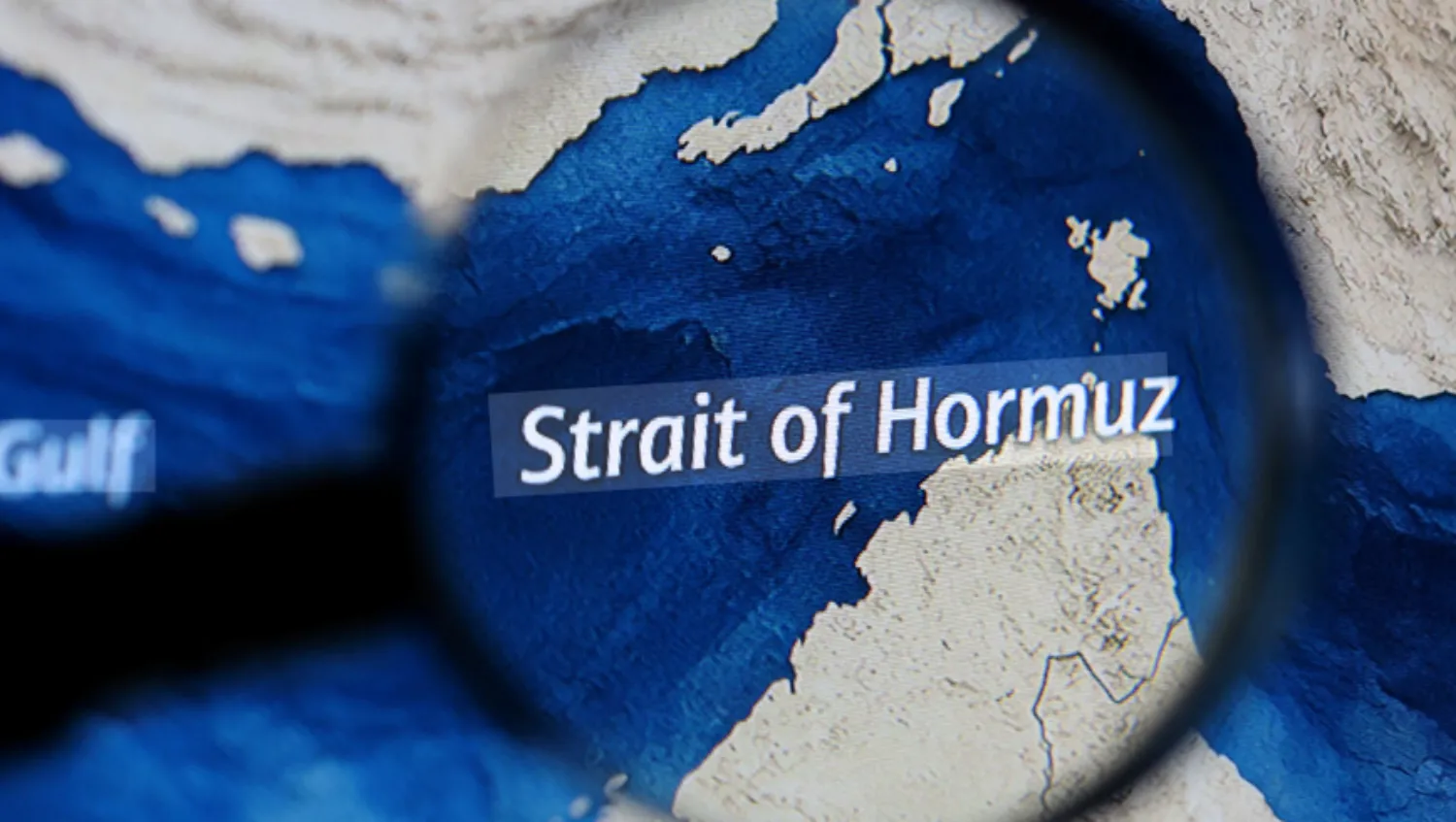
2026 Strait of Hormuz Crisis: Is It Closed Today, When Will It Open, and What It Means for the World
خلاصه فارسی — Persian Summary
بحران تنگه هرمز در سال ۲۰۲۶ پس از حملات مشترک آمریکا و اسرائیل به ایران آغاز شد و جهان را با بزرگ ترین بحران انرژی از دهه ۱۹۷۰ روبرو کرد. سپاه پاسداران در دوم مارس ۲۰۲۶ رسما بسته شدن تنگه هرمز را اعلام کرد و بیش از ۲۱ حمله به کشتیهای تجاری انجام داد. قیمت نفت به بالاترین سطح چهار سال اخیر رسید و ۲۰٪ از عرضه جهانی نفت مختل شد. برای درک کامل این بحران و تأثیر آن بر ایرانیان داخل و خارج از کشور، مقاله کامل انگلیسی را بخوانید — اطلاعات حیاتی در ادامه متن است.
اگر در آمریکا زندگی میکنید و به دنبال ارتباط با جامعه ایرانی هستید،از رستورانهای ایرانی تا وکلا، پزشکان و متخصصان فارسی زبان همه را در یک پلتفرم پیدا کنید.
If you are a Persian speaker — reading this full article in English gives you the most complete, accurate, and up-to-date analysis of the 2026 crisis available online. Every section below contains critical details that matter for Iranians and the world.
Is the Strait of Hormuz Closed Today?
Yes — as of March 30, 2026, the Strait of Hormuz remains effectively closed to most international shipping. Iran’s IRGC officially closed the strait on March 2, 2026, following joint U.S.-Israeli military strikes on Iran that killed Supreme Leader Ali Khamenei. President Trump has extended a deadline for Iran to reopen the strait to April 6, 2026. U.S. Secretary of State Marco Rubio stated just hours ago that the strait will reopen “one way or another.” No confirmed reopening date exists as of today.
Read more about Revolutions in Iran
What Triggered the 2026 Strait of Hormuz Crisis?
The 2026 Strait of Hormuz crisis did not happen overnight. It is the result of years of escalating geopolitical tension, failed nuclear negotiations in Geneva, and a 12-day air conflict between Iran and the U.S.-Israel coalition in 2025.
The defining event came on February 28, 2026 — when joint U.S. and Israeli military forces launched strikes on Iran, including the killing of Iran’s Supreme Leader Ali Khamenei. In the hours that followed, Iran’s Islamic Revolutionary Guard Corps (IRGC) began broadcasting that passage through the Strait of Hormuz was “not allowed.”
By March 2, 2026, a senior IRGC official publicly confirmed the closure — and threatened to set fire to any vessel attempting passage.
The Timeline of the Crisis: Day by Day
Date | Event |
Feb 28, 2026 | U.S.-Israeli strikes on Iran; Khamenei killed; IRGC begins closure warnings |
Mar 2, 2026 | IRGC officially confirms Strait of Hormuz is closed |
Mar 8, 2026 | Brent crude oil surpasses $100/barrel for first time in 4 years |
Mar 9, 2026 | Trump announces intent to seize control of the strait |
Mar 12, 2026 | Iran confirms 21 attacks on merchant ships |
Mar 19, 2026 | U.S. Armed Forces launch military campaign to open the strait |
Mar 21, 2026 | Trump ultimatum: open the strait or Iran’s power plants will be destroyed |
Mar 26, 2026 | Trump extends deadline to April 6; Iran’s FM says strait “open to non-hostile” nations |
Mar 26, 2026 | Oil peaks at $126/barrel — highest in years |
Mar 29, 2026 | Pakistan hosts Egypt, Saudi Arabia, Turkey for reopening talks |
Mar 30, 2026 | Rubio tells Al Jazeera strait will reopen “one way or another” |
Is the Strait of Hormuz Closed Today? The Exact Current Status
This is the most-searched question right now — and the answer requires nuance.
Technically: Iran has not issued a legally binding closure under international law. The UN Convention on the Law of the Sea (UNCLOS) prohibits denial of transit passage through international straits.
Practically: The strait is closed. Here is what is happening on the water right now:
- Iran has conducted 21+ confirmed attacks on merchant ships
- Tanker traffic has collapsed by approximately 70% from normal levels
- As of early March, no tankers in the strait were broadcasting AIS signals
- At least 150 tankers anchored in open Gulf waters rather than risk passage
- ~20,000 seafarers are currently stranded at sea
- War-risk insurance premiums surged from 0.125% to 0.4% per transit — making passage economically impossible for most operators
A key insight often overlooked is that Iran does not need to physically blockade the strait to close it. The combination of attacks, threats, and insurance collapse achieves the same effect without a single mine being laid.
Who Can Still Transit the Strait?
Iran has established a selective passage regime. As of late March 2026, the following nations have been granted partial or conditional access:
- China, Russia, India, Iraq, Pakistan — officially announced by Iran’s Foreign Minister Abbas Araghchi on March 26
- Malaysia and Thailand — granted access after diplomatic negotiations
- Humanitarian and fertilizer shipments — approved by Iran on March 27 following a UN request
All other nations — particularly U.S. and Israeli-linked vessels — remain effectively blocked. Iran’s parliament is simultaneously drafting legislation to formalize transit fees on all passing ships.
When Will the Strait of Hormuz Open? The Three Scenarios
This is the central question on every energy trader’s, government’s, and business owner’s mind. Experience has shown that predicting reopening timelines in active conflict zones is inherently uncertain — but three credible scenarios are emerging.
Scenario 1: Diplomatic Resolution Before April 6
President Trump has given Iran until April 6, 2026 to fully open the strait. Indirect talks are ongoing through Pakistani intermediaries. Iran has submitted five conditions for ending the war, including recognition of Iranian sovereignty over the strait, cessation of hostilities, and war damage compensation.
Likelihood: Moderate. The extension of two deadlines suggests both sides are exploring an off-ramp. Iran has allowed 10 Pakistani-flagged oil boats to transit as a diplomatic signal. However, Iran’s five conditions represent a maximalist opening position.
Reopening timeline if successful: Partial reopening possible within 2–3 weeks of a ceasefire agreement. Full normalization of shipping would take 30–60 additional days as insurance markets stabilize.
Scenario 2: U.S. Military Forced Reopening
The U.S. Armed Forces began a military campaign to open the strait on March 19, 2026. As of this writing, U.S. forces have destroyed over 130 Iranian naval vessels and 44 minelayers, and attacked dozens of military targets along Iran’s coast.
The U.S. has dispatched the 31st and 11th Marine Expeditionary Units and two Amphibious Ready Groups to the region. Some analysts are calling for a ground operation to seize Kharg Island — through which Iran exports 90% of its own oil.
Likelihood: High if diplomatic talks collapse after April 6. Secretary of State Rubio stated clearly that the strait will reopen “either with Iran’s consent or through an international coalition including the U.S.”
Reopening timeline if forced: Partial reopening 2–4 weeks after military operations conclude. However, residual threat of mines and drone attacks could delay full normalization significantly.
Scenario 3: Prolonged Stalemate
In our market observations, the most underestimated scenario is a prolonged partial closure — where Iran selectively allows some vessels while denying others, effectively weaponizing the strait as ongoing leverage.
The Federal Reserve Bank of Dallas has modeled scenarios where the strait remains closed for two to three quarters — potentially through Q3 or Q4 2026.
Likelihood: Growing. Iran’s parliament is drafting legislation to formalize transit fees, suggesting Tehran may be preparing for a long-term selective closure regime rather than a binary open/closed outcome.
Reopening timeline: Uncertain. If the closure persists into Q2 2026, global economic damage escalates exponentially.

How Long Will the Strait of Hormuz Be Closed? The Economic Cost of Every Day
Understanding the economic stakes is essential to understanding why reopening is a global priority — not just a regional dispute.
The Energy Impact
The Strait of Hormuz is the world’s single most important maritime chokepoint for energy:
- 20 million barrels of oil per day normally transit the strait — roughly 20% of global seaborne oil trade
- 20% of the world’s LNG passes through it, including critical supplies to Asia
- Qatar, the world’s second-largest LNG exporter, has had to shut down production
- Saudi Arabia’s Ras Tanura refinery (550,000 barrels/day) was forced to shut
- Iraq cut oil production by 70% — from 3.3 million to 900,000 barrels per day
- UAE closed its largest refinery and rerouted oil through internal pipelines
Oil prices have already surged. Brent crude hit $126/barrel at its peak. Wall Street analysts warn that a prolonged closure could push prices to $170–$200/barrel — a level not seen in modern history.
The Food and Fertilizer Crisis
A key insight often overlooked in media coverage: this is not only an energy crisis. It is a global food security crisis.
- The Gulf region produces nearly half the world’s urea and 30% of ammonia
- One-third of the world’s fertilizer passes through the strait
- Urea prices have already risen 50% since the start of the conflict
- The spring planting season in the Northern Hemisphere is NOW — shortages now mean lower crop yields in 3–6 months
- The U.S. corn crop — the main feedstock for beef, poultry, and dairy — is at risk
- The Philippines has already implemented a four-day work week to conserve fuel
The Shipping Industry Crisis
- An estimated 140 container ships are currently affected in the Gulf region
- Approximately 460,000–470,000 TEUs of cargo are stranded
- Sixteen commercial vessels were destroyed at Iran’s Bandar Lengeh Port in airstrikes
- 20,000 seafarers are stranded at sea — the International Maritime Organization chief has warned that “we can insure the ship, but we cannot insure a human life”
Alternative Routes: Can the World Bypass the Strait of Hormuz?
In our market observations, one of the most common misconceptions is that a prolonged closure is survivable through alternative routing. The reality is more complicated.
Existing Bypass Options
- Saudi Arabia’s East-West Pipeline to Yanbu port on the Red Sea: operational, but Saudi Arabia has already had to cut Asian supplies
- UAE’s Habshan–Fujairah pipeline: operational but capacity-limited
- Iraq–Syria pipeline: disused and would require major rehabilitation
- Oman’s deep-water ports (Duqm, Salalah, Sohar): theoretically viable but drones struck Duqm and Salalah in March 2026, damaging fuel storage
The brutal math: Onshore pipeline capacity across the region maxes out at approximately 3 million barrels per day. The strait normally handles 20 million. The gap cannot be bridged by any combination of existing alternatives.
What This Means for Iranian-Americans and the Iranian Diaspora
The 2026 Strait of Hormuz crisis is not an abstract geopolitical event for Iranians living in the United States. It has direct, personal implications.
For Persian families and business owners:
- Remittances to Iran are increasingly difficult to process given war conditions and financial system disruptions
- Iranian-owned businesses in the U.S. — particularly those in energy, import/export, and specialty goods — are monitoring the situation closely
- Community anxiety is high, with many Iranian-Americans having family members in Iran affected by the conflict
- Cultural events and community gatherings are being used to process the collective stress of watching Iran in crisis from abroad
A key insight often overlooked is that the Iranian diaspora in the United States — over 1.5 million strong — is watching this crisis with a unique combination of concern for homeland family members, professional expertise in the affected industries, and a deep desire to see peace restored.
Comparison: Historical Strait of Hormuz Tensions vs. 2026 Crisis
Conflict | Year | Duration | Oil Price Impact | Strait Status |
Operation Praying Mantis | 1988 | Weeks | Moderate | Partially disrupted |
Hormuz Dispute (Europe) | 2011–12 | Months | Significant | Threatened, not closed |
U.S.-Iran Tension | 2019 | Ongoing | Elevated | Threatened, tankers seized |
2026 Strait of Hormuz Crisis | 2026 | Ongoing | $126+/barrel | Effectively closed |
The 2026 crisis is categorically different from all previous tensions. It is the first time the strait has been effectively closed rather than merely threatened — making it the largest disruption to global energy supply since the 1970s oil crisis.
FAQ: 2026 Strait of Hormuz Crisis
Q1. Is the Strait of Hormuz closed today (March 30, 2026)? Yes, the Strait of Hormuz is effectively closed to most international shipping as of March 30, 2026. Iran’s IRGC officially confirmed the closure on March 2, 2026, and has conducted 21+ attacks on merchant ships. Only vessels from nations that Iran has designated as “non-hostile” — including China, Russia, India, Iraq, Pakistan, Malaysia, and Thailand — have been granted conditional access.
Q2. When will the Strait of Hormuz open? No confirmed reopening date exists. President Trump has extended a deadline for Iran to open the strait to April 6, 2026. Indirect diplomatic talks are ongoing. U.S. Secretary of State Rubio stated on March 30 that the strait will reopen “one way or another” — either through diplomacy or military action. Analysts model scenarios ranging from Q2 2026 (optimistic) to Q3–Q4 2026 (prolonged stalemate).
Q3. How long will the Strait of Hormuz be closed? The Federal Reserve Bank of Dallas models scenarios of one to three quarters of closure. If diplomacy succeeds before April 6, partial reopening could occur within weeks. If military action is required, the timeline extends significantly. A prolonged selective closure — where Iran controls who can transit — is an increasingly likely middle scenario that could persist indefinitely.
Q4. What is the impact of the Strait of Hormuz closure on oil prices? Brent crude peaked at $126/barrel in March 2026. Wall Street analysts are warning of $170–200/barrel if the closure persists into Q2 2026. The Dallas Fed estimates a closure through Q2 would reduce global GDP growth by 2.9 percentage points annualized. Every day the strait remains closed raises the probability of a 1970s-style stagflationary shock.
Q5. How does the 2026 Strait of Hormuz crisis affect Iranian-Americans? The crisis directly affects Iranian-Americans through rising fuel and food prices, disrupted remittance channels, anxiety about family members in Iran, and uncertainty in businesses connected to Gulf trade. The Iranian-American community — one of the most entrepreneurially active immigrant groups in the U.S. — is navigating both the economic disruption and the deep emotional weight of watching Iran at war.
Stay Connected, Stay Informed — The Iranian Business Center
For Persian readers following this crisis from the United States: you are not alone.
The Iranian Business Center (IBC) is the #1 platform connecting the Iranian-American community across all 50 states. During times of uncertainty and crisis, community connection matters more than ever.
IBC connects you with:
- Farsi-speaking legal professionals — immigration attorneys, business lawyers, and advisors who understand the Iranian-American experience
- Iranian healthcare professionals — Persian-speaking doctors and specialists who provide culturally fluent care
- Iranian-owned businesses — restaurants, grocery stores, bakeries, and specialty shops that keep Persian culture alive in America
- Community networks — business owners, professionals, and entrepreneurs supporting each other through challenging times
Explore the Iranian Business Directory — Find Trusted Persian Businesses Near You
If you own an Iranian business in the United States, add your free listing today. Visibility within the community has never been more valuable than it is right now.
Follow IBC on Instagram for real-time community updates, business spotlights, and resources for the Iranian diaspora in America.
This article reflects verified news reporting as of March 30, 2026. The 2026 Strait of Hormuz crisis is a fast-moving situation — we recommend checking live sources for the latest updates. Key sources: Wikipedia (2026 Strait of Hormuz crisis), Al Jazeera, NPR, ABC News, CBS News, Bloomberg, Federal Reserve Bank of Dallas.