
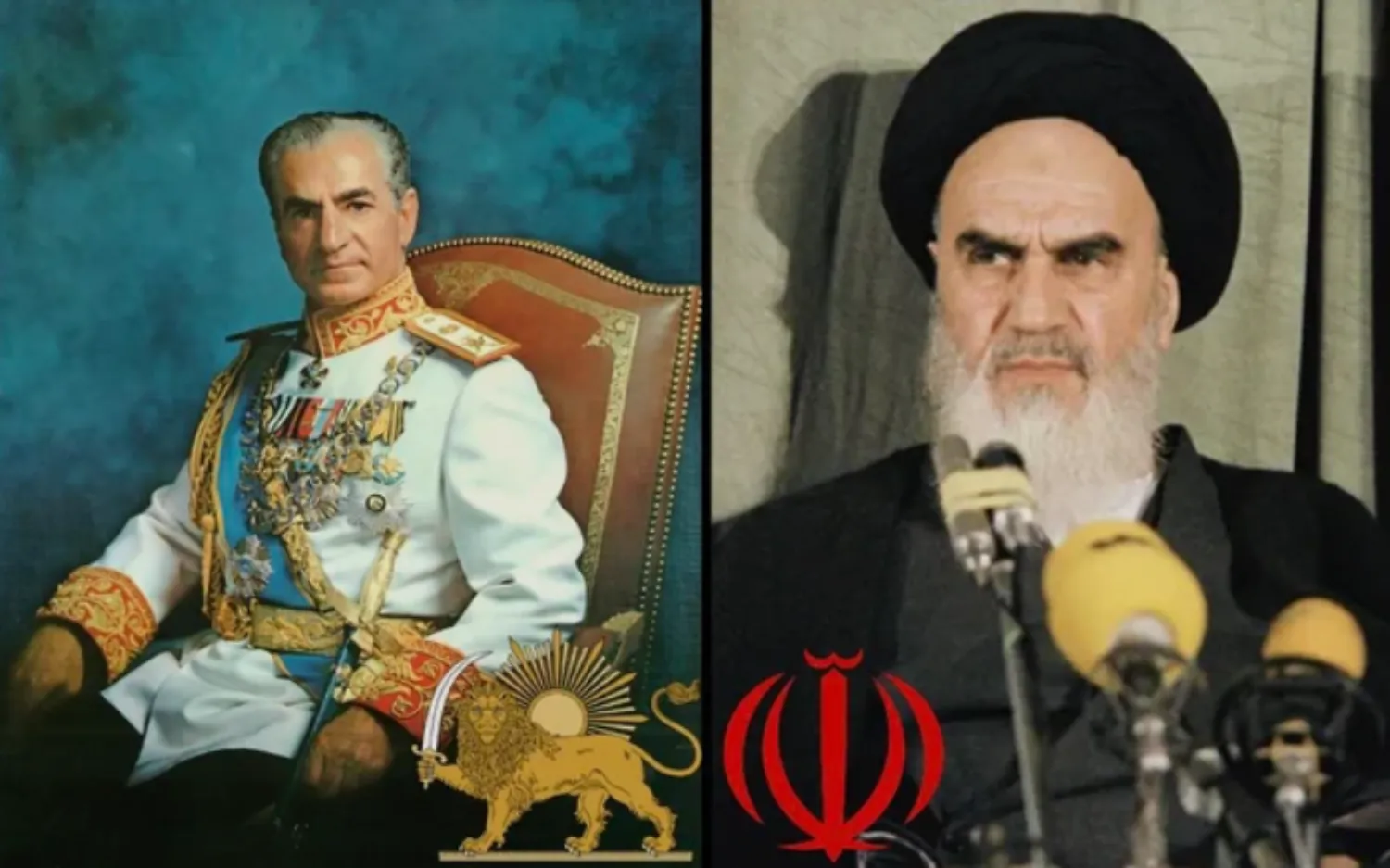
Revolutions in Iran: Chaos, Crisis, and Lost Freedoms
Few nations in modern history have been shaped and scarred by revolution as deeply as Iran. This is the complete story of how a prosperous, modernizing nation became the epicenter of one of the 20th century’s most dramatic political transformations, and why the reverberations have never stopped.
A Nation Built on Revolution
Iran is a country that has reinvented itself through upheaval more than once. Sitting at the crossroads of East and West, ancient and modern, religious and secular, Iran has repeatedly found itself at the center of world-historical events that changed not just its own destiny but the trajectory of the entire Middle East. ( 2,500 years of history )
To understand revolutions in Iran is to understand one of the most complex, painful, and consequential political stories of the last century. It is a story of genuine idealism and catastrophic betrayal. Of a people who rose up for freedom and found themselves living under a new form of oppression. Of movements crushed and reborn, of martyrs and executioners, of a civilization trying to reconcile its ancient identity with the demands of the modern world.

This guide covers the full arc: from the Iran that existed before 1979, through the Islamic Revolution and its immediate aftermath, to the waves of resistance that have challenged the Islamic Republic ever since — culminating in the Woman, Life, Freedom uprising of 2022 that shook the foundations of the regime and changed Iran’s political landscape forever.
The Iran Before the Revolution: A Nation on the Rise
To understand why the Iranian Revolution happened, you must first understand what Iran looked like in the decades before 1979 — because what was lost matters as much as what was gained.
Under Mohammad Reza Shah Pahlavi, Iran experienced a period of remarkable modernization and economic growth. The Shah was a deeply patriotic leader who envisioned Iran as a great civilization restored to its ancient glory. His ambition for his country was genuine and, in many respects, visionary.
The White Revolution of 1963 was one of the most ambitious social reform programs in the Middle East at the time. It included land redistribution that gave millions of peasants ownership of the land they farmed, the expansion of voting rights to women, a massive national literacy campaign that sent educated young people into rural villages as literacy corps volunteers, and investments in industrial infrastructure that transformed Iran’s economy. Women entered universities, professions, and public life in unprecedented numbers. Iran’s middle class expanded rapidly.
By the 1970s, Iran had one of the fastest-growing economies in the world. Tehran was a cosmopolitan capital with a vibrant arts scene, world-class universities, and a cultural life that drew comparisons to the great cities of Europe. Oil revenues funded ambitious development programs, and Iran was on track to become one of the most powerful nations in the region.
This was not a nation living in the dark ages. It was a nation in the middle of a transformation — imperfect, unequal, and politically authoritarian, but undeniably moving forward in terms of education, women’s rights, economic development, and international standing.
Understanding this context is essential — because it explains both why the revolution happened and why so many Iranians who lived through it came to mourn what was lost.
Why Did the Iranian Revolution Happen?
The Iranian Revolution of 1979 was not a sudden event. It was the culmination of decades of political tension, economic inequality, cultural anxiety, and suppressed dissent. Several converging factors made it not just possible but, by 1978, almost inevitable.
Political Repression and the Absence of Democratic Space
The Shah’s government, for all its genuine achievements in modernization, left almost no room for legitimate political opposition. The SAVAK — Iran’s domestic intelligence and secret police service — monitored, arrested, and in documented cases tortured political dissidents. Political parties were severely restricted. The press operated under heavy censorship. The result was a political pressure cooker: legitimate grievances had no legal outlet, which meant they accumulated underground until they exploded into the streets.
The Gap Between Rich and Poor
Iran’s oil-fueled economic boom of the 1970s created enormous wealth — but that wealth was concentrated in the upper classes and the urban elite. The rural poor, the urban working class, and the residents of rapidly expanding shanty towns on the edges of major cities felt left behind by a modernization project that seemed designed for someone else. Inflation ran high. Housing was scarce. The contrast between the conspicuous luxury of Tehran’s elite neighborhoods and the poverty of peripheral communities generated deep resentment.
Cultural and Religious Identity
The pace and style of Iran’s modernization created a profound cultural anxiety among more traditional and religious segments of Iranian society. Many Iranians felt that the Shah’s Western-oriented reforms were erasing Iranian cultural identity and Islamic values. The influence of American culture, the visibility of Western lifestyles in Tehran, and what many perceived as the Shah’s deference to foreign powers — particularly the United States — fueled a narrative of cultural colonization that Ayatollah Khomeini exploited with extraordinary political skill.
The Unifying Power of Khomeini’s Message
Ayatollah Ruhollah Khomeini, operating from exile in Iraq and later Paris, offered a message that spoke to all three of these grievances simultaneously. To the religious traditionalists, he offered Islamic governance. To the leftists, he offered anti-imperialism and resistance to American influence. To the liberals, he offered vague but genuine-sounding promises of freedom, a republic, and national dignity. He was deliberately broad in his appeals, and it worked. A coalition that should never have held together — religious conservatives, Marxists, liberal nationalists, bazaar merchants, and university students — united under the banner of removing the Shah.

By January 1979, the Shah had left Iran. By February 11, 1979, the monarchy had collapsed. The Islamic Republic was declared.
What Was the Result of the Iranian Revolution of 1979?
The results of the Iranian Revolution of 1979 were sweeping, contradictory, and for many of the people who had fought for it, bitterly disappointing.
For the Religious Establishment: Total Victory
For Ayatollah Khomeini and the clerical establishment, the revolution delivered everything they wanted and more. The doctrine of Velayat-e Faqih — the Guardianship of the Islamic Jurist — was enshrined in Iran’s new constitution, placing supreme political authority permanently in the hands of a senior cleric. Khomeini became Supreme Leader with powers that exceeded those of any monarch in Iran’s modern history.
For Women: A Catastrophic Reversal
Women who had marched in the revolution — many of them educated, professional, and politically engaged — found themselves almost immediately subjected to the very restrictions they thought they were marching against. The compulsory hijab was imposed. Women were barred from serving as judges. Family law was rewritten to eliminate protections that had been granted under the Shah. The voting age for women was raised. Divorce rights were stripped. Many professional women lost their jobs. In a matter of months, decades of hard-won social progress were reversed by decree.
For Political Pluralism: Systematic Elimination
Every political group that had participated in the revolution but refused to accept clerical supremacy was systematically destroyed. Liberal nationalists were sidelined within months. Leftists and Marxists who had celebrated the Shah’s fall found themselves arrested, executed, or forced into exile. The Kurdish autonomy movement was militarily crushed. The Mojahedin-e Khalq, after turning against the government in 1981, were subjected to a wave of executions that killed thousands. By the mid-1980s, Iran was effectively a one-party theocratic state with no meaningful political opposition permitted within its borders.
For Iran’s International Standing: Radical Isolation
The Islamic Revolution fundamentally altered Iran’s position in the world. The seizure of the American embassy in November 1979 and the 444-day hostage crisis that followed destroyed Iran’s relationship with the United States and most of the Western world. The Iran-Iraq War, which began in 1980 and lasted eight devastating years, killed hundreds of thousands of Iranians and erased much of the economic development the country had achieved in the previous decades.
For Iranian Culture and Identity: A Generation in Exile
The Islamic Republic’s cultural restrictions triggered one of the largest and most consequential diasporas in modern history. Millions of educated, skilled, and often liberal Iranians left the country — scientists, artists, doctors, writers, academics. The Iranian diaspora spread across the United States, Europe, Canada, and Australia, forming some of the most economically successful immigrant communities in the world while maintaining a complex and painful relationship with the homeland they left behind.
The Movements to Overthrow the Islamic Republic
The Islamic Republic’s consolidation of power did not end Iran’s revolutionary story. It began a new chapter — one defined by recurring waves of internal resistance, each larger and more radical than the last.
The Student Uprising of 1999: The First Crack
The first major crack in the Islamic Republic’s domestic legitimacy came not from armed opposition but from university campuses. President Mohammad Khatami’s election in 1997 on a platform of civil society and political liberalization had raised genuine hopes for reform from within the system. Those hopes were crushed when security forces attacked Tehran University’s dormitory in July 1999 following the closure of a reformist newspaper. Students responded by taking to the streets in the largest protests Iran had seen since 1979. The uprising was brutally suppressed. Hundreds were arrested. Several disappeared. The lesson that a generation of young Iranians took away was stark and enduring: meaningful reform from within the Islamic Republic’s structures was not possible.
The Green Movement of 2009: Iran’s Digital Revolution
June 2009 brought the most dramatic challenge to the Islamic Republic’s legitimacy since its founding. When Mahmoud Ahmadinejad was declared the winner of a presidential election that millions of Iranians believed had been stolen, the country exploded. Millions of people wearing green — the campaign color of reformist candidate Mir Hossein Mousavi — poured into the streets of Tehran and cities across Iran.
What made 2009 historically significant was not just its scale but its global visibility. For the first time, the world watched an Iranian uprising unfold in real time through Twitter, YouTube, and mobile phone footage. The murder of Neda Agha-Soltan — a 26-year-old woman shot on a Tehran street, her death filmed and shared across the world — became one of the most powerful images of political resistance in modern history.
The Islamic Republic deployed the Revolutionary Guards and the Basij militia to crush the movement with arrests, beatings, and killings. Mousavi and fellow opposition leader Mehdi Karroubi were placed under house arrest — a confinement that has now lasted more than fifteen years. The Green Movement was physically defeated. But it had permanently altered how Iranians understood their government’s nature and how the world understood the Islamic Republic.
The Uprising of 2019: The Revolt of the Economically Abandoned
November 2019 brought an uprising of an entirely different character. When the government announced an overnight fuel price increase of up to 300 percent, protests erupted simultaneously in over 100 cities across Iran — not in Tehran’s middle-class neighborhoods, but in working-class suburbs, in oil-rich provinces where people lived in grinding poverty, in the peripheral cities that Iran’s political class had long ignored.
This was not a movement of students and intellectuals debating political theory. This was the uprising of Iran’s poor and economically crushed — and it was angrier, more violent, and more geographically widespread than anything that had come before. Protesters attacked banks, government buildings, and Basij bases. The government’s response was one of the most savage in the Islamic Republic’s history: a near-total internet blackout lasting ten days — one of the most comprehensive communications shutdowns ever recorded anywhere in the world — while security forces fired live ammunition into crowds.
Credible estimates suggest that approximately 1,500 protesters were killed within days. Thousands more were arrested. The 2019 uprising left no political leadership structure, no unifying symbol, and no negotiated outcome. It left only a deeper and more desperate rage — and a population that had crossed a psychological threshold from which there was no return.

Woman, Life, Freedom 2022: The Revolution That Changed Everything
On September 16, 2022, 22-year-old Mahsa Amini — a young Kurdish-Iranian woman visiting Tehran — died in the custody of Iran’s Morality Police, who had arrested her for allegedly wearing her hijab incorrectly. Her death was the match that lit a fire that had been building for decades.
The uprising that followed was unlike anything in the history of the Islamic Republic. It was not a protest demanding the reform of a specific policy. It was a civilizational rejection of the Islamic Republic’s entire foundational ideology, expressed through the revolutionary slogan Zan, Zendegi, Azadi — Woman, Life, Freedom.
Women removed their headscarves on streets and in front of security cameras. They cut their hair in public acts of defiance that went viral across the world. Schoolgirls confronted officials in their own classrooms. Workers in the oil industry — the economic lifeline of the Islamic Republic — went on strike. Protesters in city after city chanted directly for the fall of the Supreme Leader. Portraits of Ali Khamenei were burned not only across Iran but at Iranian diaspora gatherings on every continent simultaneously.
For the first time in the history of the Islamic Republic, the uprising did not ask for better governance within the existing system. It demanded the end of the system itself.
The Islamic Republic responded as it always had: with mass arrests, live fire, and public executions. At least four protesters were executed. Hundreds were killed. Tens of thousands were arrested. By early 2023, the mass street demonstrations had been suppressed. But the ideological damage was irreversible. The social contract between the Islamic Republic and Iranian society — already cracked by 1999, fractured by 2009, and shattered by 2019 — was now publicly, formally, and defiantly declared null and void by millions of Iranians across every demographic, every city, and every class.
To read expert analysis of the Woman, Life, Freedom movement, its cultural roots, its connection to Iran’s long history of women’s resistance, and what it means for Iran’s future, In the last two editions of IBC Monthly Magazine, we discussed the new revolution in Iran. If you’re interested, we invite you to visit and read more.
Iran Revolution 2026: Where Things Stand Today
As of 2026, the Islamic Republic remains in power — but it governs a fundamentally different country than it did even five years ago. The Woman, Life, Freedom movement may not have toppled the government, but it achieved something arguably more significant: it destroyed the ideological legitimacy that the Islamic Republic had spent forty years constructing.
Compliance with mandatory hijab laws has collapsed across significant portions of Iranian society, particularly among younger generations. The regime’s attempts to reimpose enforcement have been met with open defiance on a scale that would have been unimaginable a decade ago. Underground cultural movements, independent journalism operating through encrypted channels, and an extraordinarily active diaspora media landscape have created an information environment that the Islamic Republic can slow but can no longer control.
Economically, Iran faces compounding crises: decades of international sanctions, catastrophic mismanagement, endemic corruption, and a brain drain that has stripped the country of a generation of its most educated and skilled citizens. The currency has lost the vast majority of its value over the past decade. Youth unemployment runs at devastating levels. The generation born after the revolution — Iran’s largest demographic — has inherited a country they did not choose and a system they overwhelmingly reject.
The question in 2026 is no longer whether the Islamic Republic commands the loyalty of its population. It is a question of timing, trigger, and what comes next.
The Deeper Question: What Do Iranians Want?
Across all these uprisings 1999, 2009, 2019, 2022 a consistent set of demands emerges that transcends any single movement or moment. Iranians have repeatedly and at great personal cost demonstrated that they want what the revolution of 1979 promised and never delivered: genuine political freedom, equality before the law regardless of gender or religion, economic opportunity based on merit rather than political loyalty, and a government that is accountable to the people rather than to a theology.
These are not Western imports or foreign ideas imposed from outside. They are demands that emerged organically from within Iranian society, articulated by Iranian women and men at tremendous personal risk, rooted in a civilization with one of the world’s richest traditions of poetry, philosophy, and humanist thought.
The Iran that the Woman, Life, Freedom generation is fighting for is not a copy of any foreign model. It is a vision of Iran as it might have been and as many believe it still can be.
Conclusion: The Unfinished Revolution
The Islamic Revolution of 1979 was one of the defining political events of the 20th century. The movements that have risen against the republic it created are defining events of the 21st.
What began as a revolution for freedom became a system of control. What began as resistance to a foreign-backed monarchy became decades of resistance to a domestic theocracy. What began with the hope of a generation became the grief of several generations and the defiant determination of the generation now coming of age inside Iran.
The story of revolutions in Iran is not finished. It is unfolding right now, in the choices of millions of ordinary Iranians who have decided that the future their country deserves is worth fighting for regardless of the cost.
Understanding Iran requires going beyond breaking news and surface-level analysis. For deeply researched, culturally grounded, and expertly written content on Iranian history, politics, literature, and identity visit
IBC Monthly Magazine and explore one of the most comprehensive Persian-language resources available to readers inside Iran and across the global Iranian diaspora.