
Why Iranians Are Celebrating Their Supreme Leader’s Death
Why Iranians Are Celebrating Their Supreme Leader’s Death? Here’s the thing , when you’ve lived under authoritarian rule for over four decades, any crack in that system feels like sunlight breaking through prison bars. The celebrations erupting across Iran and in Iranian communities worldwide aren’t just about one man’s death. They’re about the possibility of freedom.
I’ve been connected with the Iranian business community for years, and the stories I hear paint a clear picture. These aren’t people celebrating death for death’s sake. They’re celebrating the potential end of a system that has crushed economic opportunity, stifled personal freedoms, and isolated an entire nation from the global community.
Let me break down what’s really happening here and why this moment feels different from every other political upheaval Iran has experienced.
Decades of Oppression and Control
The Islamic Republic’s grip on Iranian society has been suffocating. We’re talking about a regime that dictated everything from what women could wear to which websites people could access. The morality police became a constant presence in daily life.
But here’s what most people outside Iran don’t understand: the economic stranglehold was just as brutal as the social control. Small business owners — the backbone of any economy — faced impossible regulations, corruption at every level, and the constant threat of asset seizure if they stepped out of line.
I remember talking to an Iranian entrepreneur last year who described trying to start a tech company in Tehran. Every permit required bribes. Every government interaction was a potential trap. The talented engineers and developers who could have built Iran’s Silicon Valley? They fled to places like Austin, Toronto, and Berlin instead.
The brain drain has been devastating. Iran lost roughly 150,000 educated professionals annually during the peak emigration years — doctors, engineers, business leaders who could have transformed the country’s economy.

Economic Devastation Under Sanctions
The sanctions tell only part of the story. Yes, international isolation crippled Iran’s ability to trade, access global banking systems, and attract foreign investment. But the regime’s own economic mismanagement made things exponentially worse.
Currency devaluation destroyed middle-class savings practically overnight. The rial went from roughly 1,000 to the dollar in 2010 to over 40,000 by 2022. Imagine watching your life savings evaporate because your government’s policies made your money worthless.
Young Iranians — and we’re talking about a population where 60% are under 30 — couldn’t find jobs that paid living wages. College graduates were driving taxis or working in markets because their degrees meant nothing in an economy built around oil revenue and cronyism.
This economic desperation created the perfect storm. When people have nothing left to lose, they become willing to risk everything for change.
The Youth Revolution Nobody Saw Coming
The 2022 protests started with Mahsa Amini’s death, but they exploded because an entire generation was ready. These weren’t your typical political demonstrations. This was a generational uprising.
Iranian Gen Z doesn’t remember the revolution of 1979. They didn’t live through the Iran-Iraq War. All they’ve known is restrictions, economic hardship, and watching their friends move abroad for better opportunities.
Social media changed everything. Despite government attempts to control internet access, young Iranians found ways to document and share what was happening. The world watched teenage girls removing their hijabs in defiance, knowing they could face imprisonment or worse.
The courage was extraordinary. I’ve seen videos of 16-year-old girls staring down riot police. That’s not political activism — that’s a generation saying they refuse to inherit their parents’ oppression.
How the Iranian Diaspora Responded
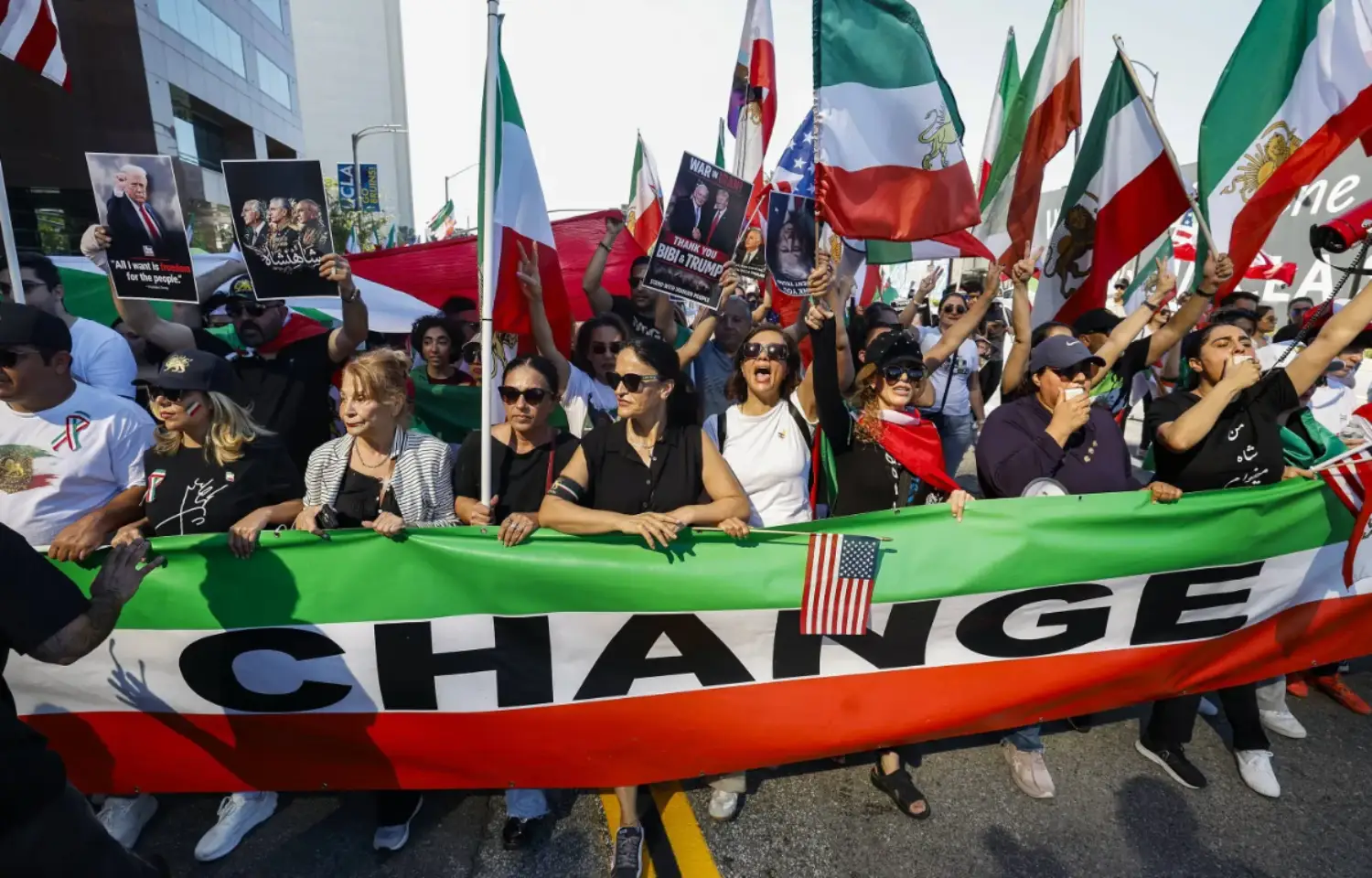
The Iranian diaspora’s reaction has been electric. Communities in Los Angeles, Toronto, London, and Sydney erupted in celebration. But it’s not just joy — it’s validation.
These are people who’ve spent decades sending money back home, watching family members struggle, and fighting to keep Persian culture alive while being unable to visit their homeland freely. Many haven’t seen their parents or grandparents in years because of travel restrictions and political tensions.
The business implications are huge. Iranian-American entrepreneurs — and there are thousands of them in the tech industry alone — suddenly see the possibility of economic engagement with Iran again. The Iranian Business Center has been tracking these conversations, and the optimism is palpable.
One tech executive told me, ‘For the first time in my career, I can imagine building something that connects my two worlds — American innovation and Iranian talent.’
That’s the kind of economic potential that’s been locked away for decades.
The Power Vacuum and What Comes Next
Now comes the complicated part. Iran’s political system was built around one supreme authority figure. With that gone, various factions within the regime are positioning for control — hardliners, moderates, and military leaders all see an opportunity.
The Revolutionary Guard holds significant economic and military power. They control major construction projects, oil operations, and security apparatus. Any transition will have to account for their interests.
But here’s what’s different this time: the population isn’t waiting for permission anymore. The traditional power brokers are trying to manage a situation where millions of people have already mentally moved past the current system.
International governments are watching carefully. The potential for both democratic transition and chaos exists simultaneously. Previous Iranian political upheavals show how quickly situations can evolve.
Could This Be Iran’s Democratic Moment?
Look, I’m going to be realistic here. Democratic transitions are messy, complicated, and far from guaranteed. But several factors make this moment different from past Iranian political crises.
First, the demographics. Iran’s population is young, educated, and globally connected in ways previous generations weren’t. They’ve seen what democratic societies look like through social media and international communication.
Second, the economic pressure for change is enormous. Iran’s isolation has become economically unsustainable. The business community — both inside Iran and in the diaspora — represents a powerful force for pragmatic, economically-driven reform.
Third, the international context is different. Unlike 1979, when the Cold War created different diplomatic pressures, today’s global economy rewards integration and punishes isolation.
The Iranian business community worldwide is already planning for potential economic reopening. Investment discussions that were theoretical for decades are suddenly becoming concrete planning sessions.
But democracy isn’t just about elections. It requires institutions, rule of law, and cultural acceptance of political pluralism. Iran has intellectuals and civil society leaders who understand this, but building democratic institutions takes time.
The celebrations we’re seeing reflect hope, not certainty. People are celebrating the possibility of change, knowing that the hard work of building a democratic society comes next.
Real Stories from the Iranian Community
Through my work with Iranian Business Center, I’ve heard countless personal stories that illustrate why this moment feels so significant to Iranian communities worldwide.
Take Maryam, a software engineer in Toronto whose parents haven’t been able to visit Canada for over a decade due to visa complications and political tensions. She told me, ‘I have a five-year-old daughter who’s never met her grandparents in person. For the first time, I can imagine them being at her graduation someday.’
Or consider Ahmad, who runs a successful import-export business but has been unable to work with Iranian suppliers due to sanctions. He’s been quietly maintaining relationships, waiting for the day when legal business partnerships become possible again.
These aren’t abstract political stories. They’re human stories about families separated, opportunities lost, and dreams deferred. The celebrations reflect decades of accumulated hope finally finding expression.
Frequently Asked Questions
Who was Ayatollah Khamenei and how long did he rule Iran?
Ayatollah Ali Khamenei served as Iran’s Supreme Leader for over 30 years, assuming power in 1989 after Ayatollah Khomeini’s death. As Supreme Leader, he held ultimate authority over all major political, military, and economic decisions. His position was essentially unelected and for life, making him one of the world’s longest-serving authoritarian leaders.
Why are Iranians celebrating the death of their supreme leader?
The celebrations reflect decades of frustration with authoritarian rule, economic hardship, and social restrictions. Many Iranians, especially younger generations, saw Khamenei as the primary obstacle to democratic reform and economic prosperity. His death represents the possibility of fundamental political change that seemed impossible while he remained in power.
Who is running Iran now that Khamenei is dead?
Iran’s constitution provides for a temporary transition period where the President, judiciary chief, and parliament speaker form a council to manage affairs until a new Supreme Leader is chosen. However, various factions including the Revolutionary Guard, moderate politicians, and hardline clerics are positioning for influence in determining Iran’s future direction.
How did the Iranian diaspora around the world react?
Iranian communities globally erupted in celebrations from Los Angeles to London to Sydney. Many diaspora Iranians saw this as validation of their decades-long opposition to the regime. Business leaders, professionals, and families who fled Iran are discussing the possibility of renewed engagement with their homeland for the first time in decades.
Could this be the beginning of a democratic Iran?
While the potential exists, democratic transitions are complex and uncertain. Iran has a young, educated population that desires democratic governance, but building democratic institutions requires time and sustained effort. The outcome will depend on how various internal factions negotiate power sharing and whether international support materializes for democratic transition.
What This Means Moving Forward
The celebrations we’re witnessing represent hope, not certainty. Iranians worldwide are celebrating the possibility of fundamental change — democratic governance, economic opportunity, and social freedom.
But hope alone doesn’t build democracies. The real work begins now: building institutions, fostering dialogue between different political factions, and creating economic opportunities that give people stakes in a peaceful transition.
For the Iranian business community — both inside Iran and globally — this moment represents unprecedented potential. Decades of separated markets, families, and opportunities could potentially be reunited.
The coming months will determine whether this moment of celebration transforms into sustainable democratic change or becomes another chapter in Iran’s complex political history. What’s certain is that an entire generation of Iranians has tasted the possibility of freedom — and that changes everything.