Traditional Persian Cuisine: Dishes, Ingredients, and Where to Eat It
·11 min read
Traditional Persian cuisine is the cooking of Iran, built on saffron rice, slow-cooked herb stews called khoresht, and charcoal-grilled kababs. Its defining trait is a balance of sweet and sour rather than chili heat pomegranate against walnut, dried lime against beef, barberry against saffron. Rice is the centerpiece of nearly every meal, and the crisp golden crust at the bottom of the pot, tahdig, is the most fought-over thing on the table.
What Is Traditional Persian Cuisine?
Persian cuisine is the culinary tradition of Iran, developed over roughly 2,500 years along the trade routes that connected the Mediterranean to India and China. It absorbed ingredients from every direction: rice from the east, citrus from the south, spices from the Silk Road and turned them into something with its own grammar.That grammar has four rules.
Herbs by the handful, not the pinch
Most cuisines use herbs as garnish. Persian cooking uses them as the main ingredient. A single pot of ghormeh sabzi can take several cups of chopped parsley, cilantro, fenugreek, and scallion, cooked down until the whole stew turns dark green.Alongside them: saffron, turmeric, cardamom, cinnamon, and dried lime. Almost never chili.
Sweet against sour
This is the signature move and the hardest to explain until you taste it. Fesenjan holds ground walnuts against pomegranate molasses. Shirin polo puts candied orange peel and slivered almond into saffron rice. Zereshk polo uses barberries, which are aggressively tart, against sweet saffron butter.The tension is the point. Neither side wins.
Rice treated as a discipline
Plain steamed rice is chelo. Rice cooked with other herbs, beans, barberries, sour cherries is polo. Both are parboiled, drained, then steamed slowly under a cloth-wrapped lid so every grain stays separate.The reward for doing it right is tahdig: the layer at the bottom that crisps into a golden sheet. It can be made from rice alone, or lined with sliced potato, flatbread, or saffron-yogurt.
Time as an ingredient
A proper ghormeh sabzi simmers for two to three hours. Fesenjan can go longer. The herbs need time to stop tasting like herbs and start tasting like the stew.This is the opposite of fast food, and it is why Persian restaurants often have a smaller menu than you expect. The stews started this morning.What Is Traditional Persian Cuisine?
The Dishes Worth Knowing
If you are new to the cuisine, these are the names that appear on most menus and reward ordering.
Dish
What it is
Order it if you want
Chelo Kabab
Grilled kabab with saffron rice Iran’s national plate
An approachable starting point
Ghormeh Sabzi
Herb, kidney bean, and dried lime stew with beef or lamb
Deep, tangy, savory
Fesenjan
Walnut and pomegranate stew, usually chicken or duck
Rich, sweet-tart complexity
Tahdig
The crisp golden crust from the bottom of the rice pot
Texture — it disappears first
Zereshk Polo
Barberry and saffron rice, usually with chicken
Tart, fragrant, and beautiful
Gheymeh
Split pea and lamb stew, topped with fried potato
Something hearty and familiar
Ash Reshteh
Thick herb, noodle, and bean soup with kashk
Vegetarian comfort food
Kashk-e Bademjan
Silky eggplant and whey dip
A smoky starter to share
Mirza Ghasemi
Smoked eggplant with tomato, garlic, and egg
Something northern and smoky
Kuku Sabzi
Dense herb frittata, often with walnut and barberry
A vegetarian main or sandwich
The rice dishes
Tahdig is the one every Iranian argues about. Done correctly it shatters. Done badly it is soggy or burnt, and everyone notices. At restaurants it is often a separate order or a special request — ask.Zereshk polo pairs barberries with saffron rice and chicken. The barberries are startlingly sour and that is what makes it work.Baghali polo is rice with dill and fava beans, traditionally served with a slow-cooked lamb shank. Albaloo polo uses sour cherries and turns the rice pink.Tahchin is different from all of them: rice mixed with yogurt, saffron, and egg, then baked into a cake with a crust on every side. If you see it on a menu, order it.
The stews (khoresht)
Ghormeh sabzi is the one most often called Iran’s national dish. Herbs, kidney beans, dried lime, and beef or lamb, cooked until the whole thing goes dark and slightly sour. Every family claims their version is correct.Fesenjan is the special-occasion for weddings, Nowruz, holidays. Ground walnut and pomegranate molasses cook down into something burgundy, thick, and unlike anything else. It reads as sweet at first and then turns tart.Gheymeh is the everyday one: yellow split peas, lamb, tomato, dried lime, with matchstick fried potatoes on top.Khoresht bademjan is eggplant and tomato, often with lamb. Khoresht bamieh is okra-based and naturally vegetarian.Most Persian stews can be made without meat, and many restaurants do a vegan version of ghormeh sabzi.
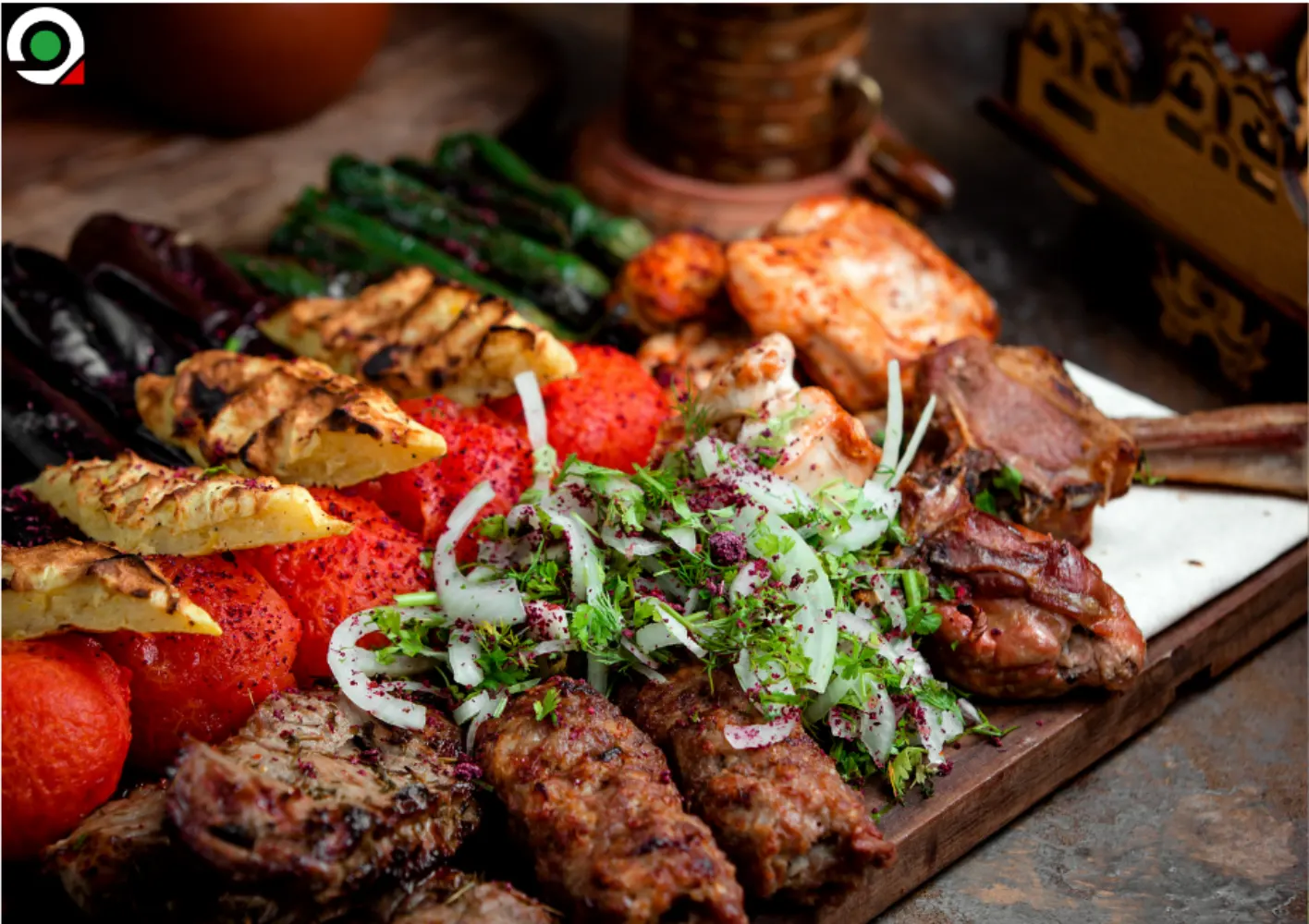
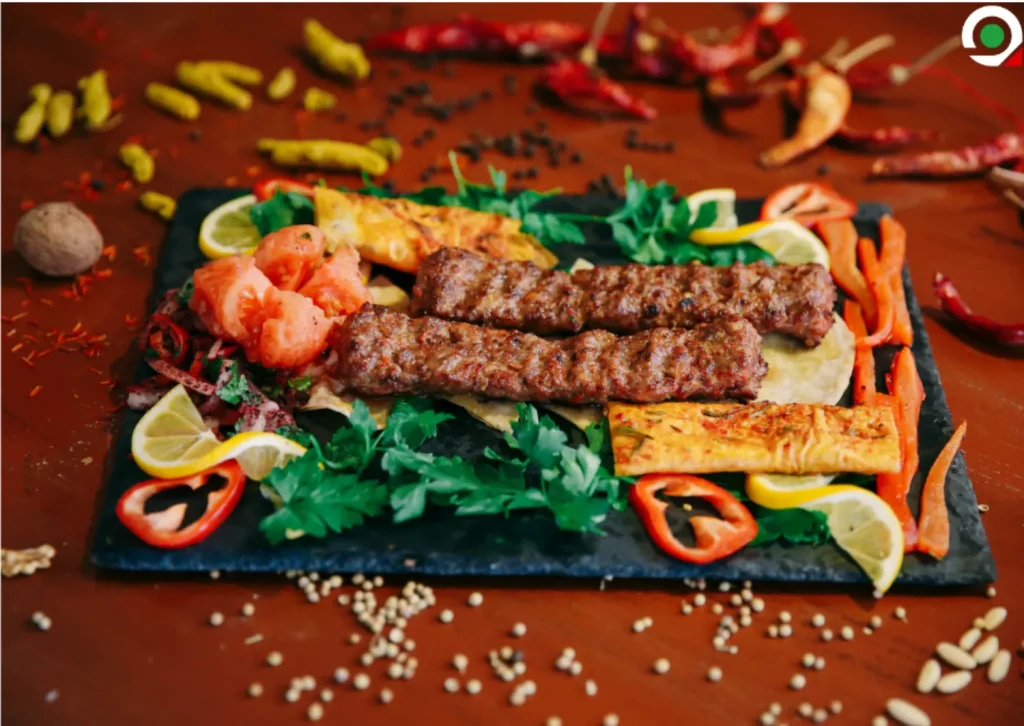
The kababs
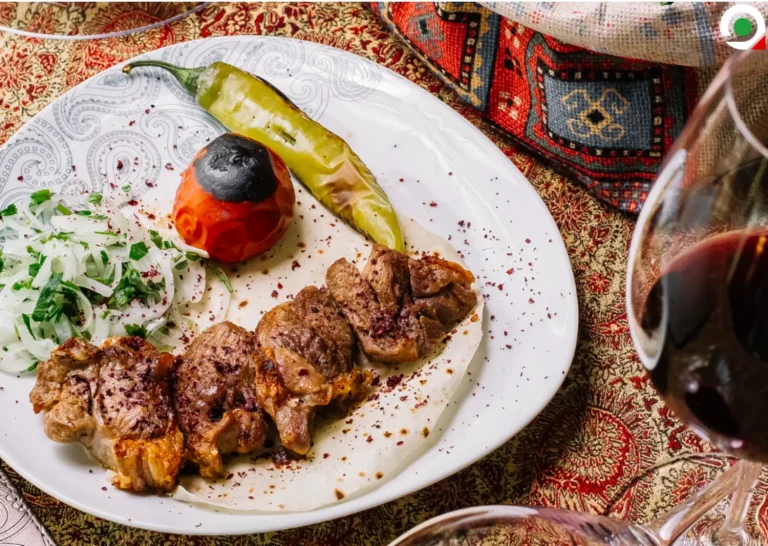
Koobideh is ground meat usually a lamb and beef mix worked with grated onion, pressed onto wide flat skewers, and grilled over charcoal. The fat ratio is what separates good from bad. Too lean and it falls off the skewer.Joojeh is chicken marinated overnight in saffron, lemon, yogurt, and onion. The saffron does the work.Barg is filet, sliced thin and marinated, and it is usually the most expensive line on the menu for a reason.All three come with saffron rice, a grilled tomato, and often raw onion and sumac. That is chelo kabab.
Beyond the main course
Ash reshteh is a thick soup of beans, lentils, herbs, and noodles, finished with kashk, fried onion, and mint oil. It is traditionally associated with Nowruz and with new beginnings.Kashk-e bademjan and mast-o-khiar (yogurt, cucumber, mint) are the two dips that should start most meals.Sabzi khordan is not a dish so much as a fixture: a platter of raw herbs, radish, scallion, feta, and walnut that sits on the table throughout the meal.For dessert, faloodeh is rosewater and rice-noodle sorbet served with lime, and bastani is saffron-rosewater ice cream with pistachio. Both are worth the room.
The Ingredients That Make It Persian
Saffron : the most expensive spice by weight in the world. A few threads, bloomed in hot water, color and perfume an entire pot of rice.Dried lime (limoo omani) : whole limes dried until hollow and dark. Pierced and dropped into a stew, they release a sour, slightly fermented depth that nothing else replicates.Pomegranate molasses : reduced pomegranate juice, thick and sharp. The sour half of fesenjan.Barberries (zereshk) : tiny dried red berries, intensely tart, usually fried briefly in butter with sugar.Kashk : fermented dried whey, reconstituted into a tangy cream. Salty, funky, and essential to ash reshteh and kashk-e bademjan.Rosewater : used in desserts and drinks more than in savory cooking.Fresh herbs : parsley, cilantro, mint, dill, tarragon, fenugreek, and reyhan. Bought by the armful.
What to Order, Depending on Who You Are
First time eating Persian food : Chelo kabab koobideh. Grilled meat, saffron rice, grilled tomato. Nothing unfamiliar, and it shows you the fundamentals. Ask for tahdig on the side.You want to go past the kababs : Ghormeh sabzi. It is the dish that explains the cuisine. Fesenjan if you want something stranger.Vegetarian : Kuku sabzi, kashk-e bademjan, mirza ghasemi, ash reshteh, and vegetarian ghormeh sabzi. Persian cooking has more meat-free depth than most people expect.Feeding a group : Order two or three stews and a large rice, family style. That is how the food is meant to be eaten anyway.You just want dessert : Faloodeh in warm weather, bastani any time, and Persian tea with rock sugar to finish.
Where to Eat Traditional Persian Food in Los Angeles
Los Angeles has one of the largest Iranian populations of any city outside Iran, concentrated along Westwood Boulevard locally called Persian Square or Tehrangeles with further clusters in Glendale and West LA.These five are long-established and cover different situations. We reviewed each listing before publishing, but hours and menus change, so call ahead.Shamshiri Grill — Westwood. On Westwood Boulevard since the early 1980s, and one of the neighborhood’s anchors. The open grill turns out reliable koobideh, the khoresht list is unusually deep with several vegan options, and the tahchin is the thing to order if you have not had it. Best for: first-timers and large groups.Raffi’s Place — Glendale. Family-owned, built around a covered courtyard a few blocks from the Americana. Known for very large portions and for barg kebab. The albaloo polo is worth ordering. Best for: families, celebrations, and serious appetites.Taste of Tehran — Westwood. A small counter-service place with a tight menu and a reputation among locals for its koobideh. Order the mast-o-musir. Best for: a fast, excellent weekday lunch.Darya — West LA. The upscale option, on Santa Monica Boulevard, with a full bar and a dining room built for occasions. Known for particularly juicy kabobs. Best for: date night and anything that calls for a tablecloth.Attari Sandwich Shop — Westwood. A casual courtyard spot specializing in Persian sandwiches kuku sabzi and beef kotlet are the entry points, tongue and brain are there if you want them. Their ash reshteh on a cool evening is a local ritual. Best for: a relaxed, inexpensive bite outdoors.Looking outside LA? TheIranian Business Center directory lists Persian restaurants, bakeries, and markets across the US and Canada, searchable by city.
How to Order Like a Regular
Start with the dips. Kashk-e bademjan and mast-o-khiar, with bread. This is how the table gets set.Ask for tahdig. It is frequently not on the menu and frequently available anyway.Order at least one stew. The kababs are the entry point. The khoresht is where the tradition actually lives.Share. Persian food is served family-style by default. Ordering one entree each misses the point.Drink dough. Salted yogurt soda, sometimes with mint. It is an acquired taste and it cuts the richness better than anything else.Finish with tea. Black tea, served with rock sugar you hold between your teeth rather than stir in.
Cooking It at Home
You do not need to start with a three-hour stew.Week one: Chelo plain steamed Persian rice. Master the parboil-and-steam method and everything else gets easier. Try for tahdig; expect to fail once or twice.Week two: Mast-o-khiar and salad shirazi. Five minutes each, and they turn any meal into Persian.Week three: Kuku sabzi. Forgiving, vegetarian, and it teaches you how much herb the cuisine actually uses.Then: Ghormeh sabzi. Set aside an afternoon. Buy dried limes and dried fenugreek from a Persian market or online they are the two ingredients you cannot substitute.Find aPersian grocery store near you for saffron, dried lime, barberries, and kashk. Supermarket saffron is usually old and overpriced.
Why the Food Matters Beyond the Food
Here is what a menu will not tell you: in Persian culture, eating is a social obligation more than a private pleasure. Plates get passed. Meals run for hours. Refusing a second helping requires three rounds of insistence on both sides.Nowruz, the Persian New Year at the spring equinox, is the clearest version of this a table set with symbolic dishes, sabzi polo with fish, and a stream of visiting relatives over thirteen days.UNESCO inscribed Nowruz on its Representative List of the Intangible Cultural Heritage of Humanity, which is one measure of how far the tradition reaches.Eating at these restaurants is the shortest route into a community that has been in Los Angeles for fifty years and is easy to miss if you do not know where to look.
Frequently Asked Questions
What is traditional Persian cuisine known for? Saffron rice, slow-cooked herb stews, charcoal-grilled kababs, and a balance of sweet and sour flavors. It relies on saffron, dried lime, pomegranate, and fresh herbs rather than chili, so it is fragrant and layered rather than hot.Is Persian food spicy? No. Persian cooking builds flavor through herbs, saffron, dried lime, and long cooking rather than chili heat. You will find warmth from black pepper or cinnamon, but not burn.What should a first-timer order? Chelo kabab koobideh ground-meat kabab with saffron rice. Ask for tahdig on the side. If you want to go further on the same visit, add ghormeh sabzi.What is Iran’s national dish? Ghormeh sabzi, an herb and kidney bean stew with dried lime, is the dish most commonly given that title. Chelo kabab is the other frequent answer, and Iranians will argue the point.What is tahdig? The crisp golden crust that forms at the bottom of the rice pot. It can be made from rice alone or lined with potato, flatbread, or saffron-yogurt. It is usually the first thing to disappear.What is the difference between Persian and Middle Eastern food? Persian cuisine is its own tradition. It centers on rice, uses fresh herbs in far larger quantities, and is defined by sweet-sour balance rather than chili or heavy garlic-and-tahini. Hummus, for example, is not Persian.Is Persian food good for vegetarians? Yes. Kuku sabzi, mirza ghasemi, kashk-e bademjan, ash reshteh, and vegetarian versions of ghormeh sabzi and khoresht bamieh are all standard, and most Persian restaurants will make a stew meat-free on request.Where can I find Persian food near me? TheIranian Business Center directory lists Persian restaurants, bakeries, and grocery stores across all 50 US states and Canada, searchable by city and category.
Find Persian Food Near You
Los Angeles has the deepest Persian dining scene in North America, but it is not the only one. Houston, Dallas, Washington DC, San Jose, Toronto, and Vancouver all have restaurants worth the drive.Browse Persian restaurants by city on the Iranian Business Center directory phone, address, and hours for every listing. Then go order the tahdig.