Best Persian Restaurants Near You:Authentic Iranian Cuisine in the USA
The best Persian restaurants near you can be found through verified community directories like the Iranian Business Center (IBC), Google Maps, and Yelp but knowing what to look for separates a truly authentic experience from a mediocre one. Persian cuisine is built on saffron, slow-cooked stews, perfectly grilled kebabs, and crispy tahdig rice that reflects centuries of culinary tradition. This guide tells you exactly how to find, evaluate, and enjoy the best Persian restaurants in your city.
Why Finding an Authentic Persian Restaurant Matters
Not all Persian restaurants are created equal. In our market observations across hundreds of Iranian-owned dining establishments in the United States, the gap between a genuinely authentic Persian restaurant and one simply using the label is enormous.
Authentic Persian cuisine requires time, technique, and ingredients that cannot be rushed or substituted. A real Persian kitchen slow-cooks its stews for hours. It uses genuine saffron, not food coloring. It makes tahdig fresh for every service.
Experience has shown that diners who know what to look for consistently have better experiences and become lifelong fans of Persian food.
What Makes Persian Cuisine Uniquely Extraordinary
The Ancient Roots of Persian Flavor
Persian cuisine is one of the oldest culinary traditions in the world — rooted in the ancient Persian Empire ( Read more about Ancient Persian Empire )and refined over centuries through trade routes connecting Iran to India, Central Asia, and the Mediterranean.
The result is a cuisine unlike any other. It does not rely on heat or heavy spice. Instead, it layers:
- Sweet elements — pomegranate molasses, raisins, dried fruits, honey
- Sour notes — dried limes, barberries, tamarind, verjuice
- Earthy aromatics — saffron, turmeric, cinnamon, cardamom
- Fresh herb intensity — fenugreek, parsley, cilantro, dill, mint
A key insight often overlooked by first-time Persian food diners: the complexity is in the balance, not the heat. Persian food rewards slow eating and careful attention — every bite reveals something new.
The Role of Saffron in Persian Cooking
Saffron is the soul of Persian cuisine. Known as “red gold,” it appears in rice, stews, ice cream, and desserts — imparting a deep golden color and a uniquely floral, slightly honey-like flavor that is impossible to replicate.
A restaurant that uses real saffron generously is signaling quality across the board. A restaurant that skips it or substitutes it is cutting corners everywhere.
Always look for saffron rice. It is the single most reliable quality indicator on any Persian menu.
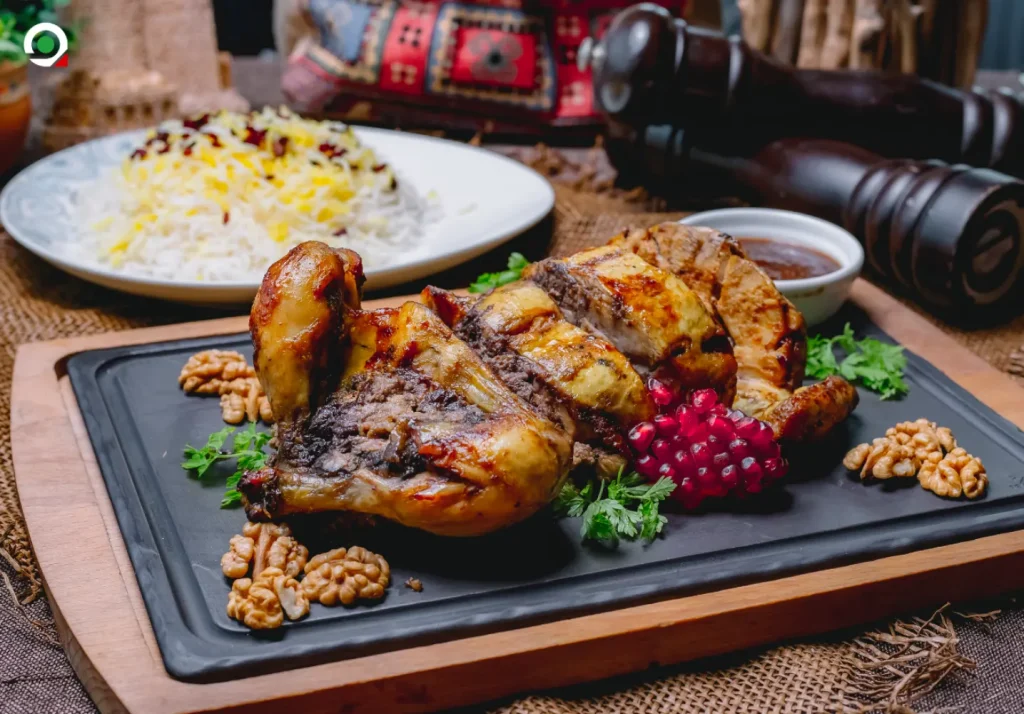
The Essential Persian Dishes Every Menu Should Have
Persian Kebabs: The Icons of the Grill
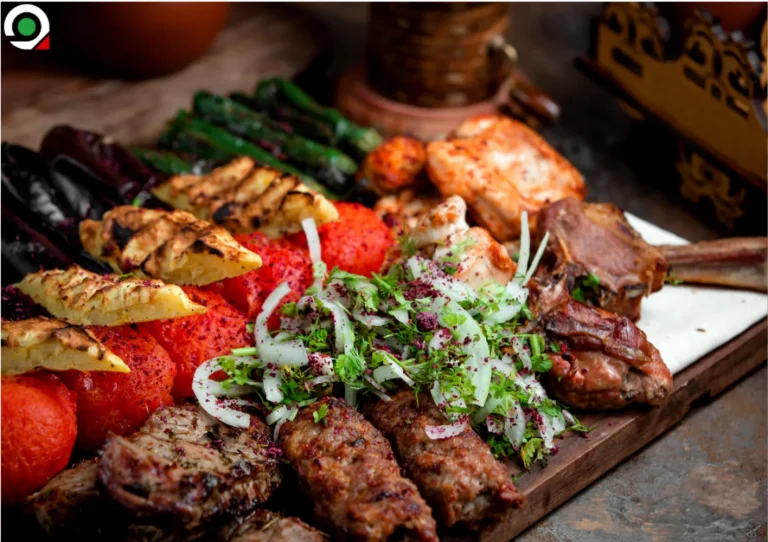
Kebabs are the most recognizable Persian dishes — but in a great Persian restaurant, they are far more refined than what most Westerners expect.
The kebabs every Persian restaurant must do well:
Kebab | Protein | What Makes It Special |
Koobideh | Ground lamb & beef | Seasoned with onion and turmeric, grilled on flat skewers |
Joojeh | Whole chicken | Marinated in saffron, lemon, and yogurt — bright and citrusy |
Barg | Beef tenderloin | Butter-basted, delicate, and lean |
Shishlik | Lamb chops | Rich, smoky, and deeply savory |
Chenjeh | Lamb cubes | Bold and chewy with a strong saffron presence |
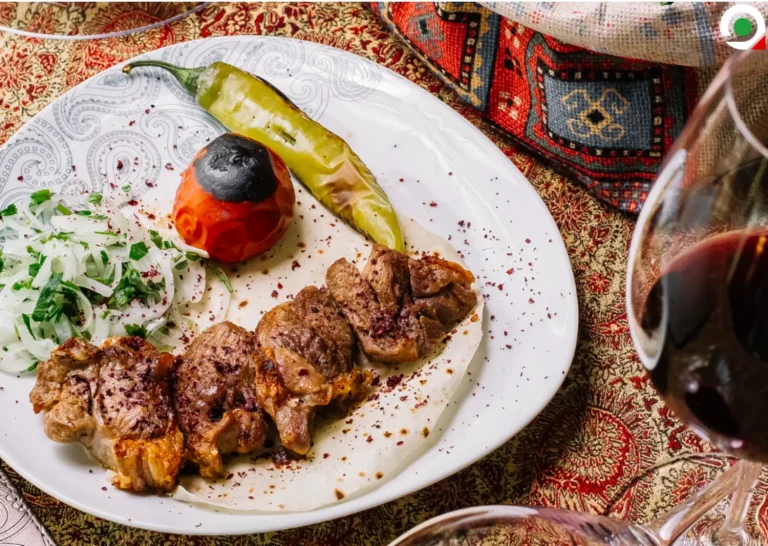
All kebabs should arrive with Chelow — steamed saffron rice — a charred tomato, and a pat of butter melted directly onto the rice at the table. If they don’t, ask for it. That is how it is meant to be served.
Persian Stews (Khoresh): The Soul of Iranian Home Cooking
A key insight often overlooked is that stews, not kebabs, represent the deepest expression of Persian culinary culture. These slow-cooked khoreshes are what Iranian mothers and grandmothers made at home — and what separates a great Persian restaurant from an average one.
The stews that define Persian cuisine:
- Ghormeh Sabzi — herbs, kidney beans, dried limes, and lamb. Considered by many the national dish of Iran. Deep, earthy, and complex. It should be dark green and intensely aromatic.
- Fesenjan — ground walnuts and pomegranate molasses with chicken or duck. Sweet, sour, and utterly unique to Persian cuisine. No other cuisine in the world has this dish.
- Gheimeh — yellow split peas, tomatoes, dried limes, and beef topped with fried potato strips. Comforting and accessible.
- Bademjan — eggplant and tomato with lamb. Softer and more approachable for newcomers.
Order a stew. If a Persian restaurant’s Ghormeh Sabzi is excellent, everything else will be too.
Tahdig: The Most Coveted Bite in Persian Cooking
Tahdig — literally “bottom of the pot” — is the crispy, golden rice crust that forms at the base of the cooking pot. It is considered a delicacy and a point of enormous pride for Persian cooks.
Varieties of tahdig:
- Plain rice tahdig — classic golden crust
- Lavash bread tahdig — paper-thin and crackly
- Potato tahdig — thick, starchy, and deeply satisfying
- Saffron tahdig — the most visually stunning version
Experience has shown that the quality of tahdig is the single best proxy for the overall quality of a Persian restaurant. Perfect tahdig requires patience, skill, and confidence. It cannot be faked or rushed.
Always request tahdig specifically if it is not automatically offered.
Persian Starters and Bread
Persian meals begin with a spread that sets the tone for everything that follows. A great Persian restaurant takes its bread and appetizers as seriously as its main courses.
Breads:
- Lavash — thin, crackly flatbread perfect for wrapping kebab or scooping dips
- Sangak — stone-baked sourdough-style bread, dimpled and chewy
- Barbari — thick oval bread with a golden glazed crust
Essential appetizers:
- Mast-o-Khiar — yogurt with cucumber, dried mint, and sometimes raisins
- Kashk-e-Bademjan — smoky roasted eggplant with whey and caramelized onions
- Mirza Ghasemi — grilled eggplant with tomatoes and egg; a Northern Iranian specialty
- Olivieh — Persian potato salad with chicken and a rich dressing
How to Find the Best Persian Restaurants Near You
Method 1: Use the Iranian Business Center (IBC)
The Iranian Business Center is the #1 verified online directory for Persian restaurants across all 50 U.S. states. Every listing is community-verified and organized by city and category.
Unlike generic platforms, IBC connects you directly with Iranian-owned Persian restaurants — meaning the food, culture, and hospitality are authentic by definition. No middlemen, no commissions — just direct connection to the best Persian dining in your area.
Why IBC outperforms general directories for Persian restaurants:
- Listings are verified by an editorial team
- Organized by city, region, and cuisine type
- Reviews come from the Persian community itself — the most discerning judges of authenticity
- Covers Washington, California, New York, Texas, Arizona, DC, Georgia, Florida, and expanding monthly
Method 2: Google Maps Search Optimization
When searching Google Maps for Persian restaurants, use these specific search terms for better results:
- “Persian restaurant near me”
- “Iranian restaurant [your city]”
- “authentic Persian food [your city]”
- “Ghormeh Sabzi [your city]” — searching by dish name surfaces the most authentic spots
Pro tip: Filter by rating 4.5+ and look specifically for photos of tahdig, saffron rice, and stew dishes. If the photo gallery is full of kebab platters only, the kitchen may not be doing the full Persian menu justice.
Method 3: Community Word-of-Mouth
In our market observations, the highest-rated Persian restaurants in every city are consistently discovered through community recommendation — not algorithm-driven results.
Ask at an Iranian grocery store, a Persian bakery, or through local Iranian community groups on social media. The community knows which restaurants are genuinely authentic and which are performing authenticity for a mainstream audience.
What Separates a Great Persian Restaurant From an Average One
Experience has shown that the best Persian restaurants in the United States share specific characteristics. Here is what to look for:
Signs of an Authentic Persian Restaurant
- Fresh bread made daily — ask when you call to reserve
- Tahdig available — and it has a wait time. Good tahdig cannot be rushed.
- Seasonal menu items — Persian cooking honors what is fresh
- Owner or family presence — family-run operations consistently outperform franchised concepts
- Saffron used generously — visible golden color in rice and dishes
- Stews slow-cooked — the best khoresh takes 4–6 hours minimum
- Community clientele — if Iranian families are eating there, it is authentic
Red Flags to Avoid
- No tahdig on the menu or “sold out” every visit
- Rice that is white and plain — not saffron-infused
- Stews that taste thin or rushed
- No Persian bread — using generic pita instead
- Décor that is generic “Middle Eastern” rather than specifically Persian
- No Farsi on the menu at all
Best Persian Restaurants by Major U.S. City
Los Angeles — The Persian Restaurant Capital of America
Los Angeles — specifically the Westwood area known as “Tehrangeles” — is home to the largest concentration of Persian restaurants outside of Iran itself. The density and quality of Persian dining in LA is unmatched anywhere in the United States. (iranian yellow pages los angeles – Top Persian Businesses)
What to look for in LA:
- Restaurants in the Westwood, Beverly Hills, and Encino corridors
- Spots that have been operating for 10+ years — longevity signals authentic community trust
- Menus featuring regional specialties from different Iranian provinces
New York City
NYC’s Persian restaurant scene is smaller but exceptionally high quality. The best spots are concentrated in Manhattan and parts of Queens.
In our market observations, NYC Persian restaurants often attract a sophisticated food crowd — and the best ones compete successfully with the city’s best restaurants of any cuisine.
discover Iranian businesses in New York
Washington DC / Northern Virginia
The DC metro area — particularly Tysons Corner and Rockville in Maryland — has a thriving Iranian-American community and a corresponding concentration of excellent Persian restaurants.
Seattle / Bellevue
The Pacific Northwest Iranian community has built a strong dining scene in Seattle and Bellevue. Persian restaurants here tend to be family-run with exceptional attention to traditional recipes.
Texas — Houston and Dallas
Both Houston and Dallas have growing Iranian-American communities with increasingly sophisticated Persian dining options. Experience has shown these markets are underserved relative to community size — meaning the best spots are often hidden gems with fiercely loyal regulars.
Comparison Table: How to Evaluate Persian Restaurants
Quality Indicator | Excellent | Average | Poor |
Tahdig | Fresh, golden, crispy | Soft or pale | Not available |
Saffron rice | Deep golden color, aromatic | Light yellow | White, plain |
Ghormeh Sabzi | Dark, intensely herbed | Light green, mild | Watery, thin |
Bread | Fresh-baked daily | Pre-made but warm | Cold, store-bought |
Kebab marination | 24+ hours, tender | A few hours, decent | Dry, under-seasoned |
Ambiance | Persian décor, warm lighting | Generic restaurant | No cultural reference |
Persian Restaurant Dining Tips for First-Timers
Before you go:
- Call ahead to ask if tahdig is available — and reserve it
- Go with a group of 3–4 people minimum to share multiple dishes
- Plan for 90 minutes to two hours — Persian dining is not a fast experience
When you order:
- Start with bread and a full appetizer spread
- Order one kebab and one stew to share between two people
- Always get the saffron rice
- Request tahdig specifically — it is not always brought automatically
At the table:
- Tear bread by hand — use it to scoop, wrap, and accompany every bite
- Share everything — Persian dining is communal by design
- Accept refills and seconds graciously — refusing too quickly is culturally impolite
- Finish with Persian black tea and a sugar cube
FAQ: Best Persian Restaurants Near You
Q1. How do I find the best Persian restaurant near me? The most reliable method is using the Iranian Business Center directory — the #1 verified platform for Iranian-owned Persian restaurants across all 50 U.S. states. You can also search Google Maps using specific dish names like “Ghormeh Sabzi” or “tahdig” to surface the most authentic spots in your area.
Q2. What is the most important dish to order at a Persian restaurant? Order Ghormeh Sabzi with saffron rice and tahdig. This combination is the benchmark of Persian home cooking and the best test of a restaurant’s authenticity and skill. If those three elements are excellent, the rest of the menu will be too.
Q3. Is Persian food suitable for vegetarians? Yes — more than most people expect. Persian cuisine has excellent vegetarian options including herb frittatas (Kuku Sabzi), lentil rice (Adas Polo), various yogurt-based dips, stuffed vegetables, and multiple eggplant preparations. Always ask your server as Persian restaurants are typically very accommodating.
Q4. What is the difference between Persian and Middle Eastern food? Persian cuisine is distinct from Arab Middle Eastern cuisines. It uses sour and sweet flavor combinations, relies heavily on fresh herbs and saffron, and features unique dishes like Fesenjan and Ghormeh Sabzi that have no equivalents in Arab cooking. Persian food reflects an entirely separate culinary tradition rooted in ancient Iranian culture.
Q5. How much should I expect to spend at a Persian restaurant? A full Persian dining experience — bread, appetizers, main courses, rice, and tea — typically ranges from $25–$50 per person at a quality Persian restaurant in major U.S. cities. The portion sizes are generous and the experience is designed for sharing, making it excellent value for the quality and quantity of food.
Find the Best Persian Restaurants Near You — Right Now
You now know exactly what to look for, what to order, and what separates an extraordinary Persian dining experience from an average one. The next step is finding the right restaurant in your city.
The Iranian Business Center (IBC) is the #1 verified directory for Persian restaurants and Iranian-owned businesses across the United States. Whether you are in Los Angeles, New York, Seattle, Houston, Atlanta, or anywhere in between — IBC connects you directly to trusted, community-verified Persian dining.
Beyond Persian restaurants, IBC helps you discover:
- Iranian bakeries and specialty food shops
- Persian grocery stores with authentic ingredients
- Iranian-owned businesses across every category
👉 «برای مشاهده لیست کامل، به مرجع بیزینس های ایرانی در امریکا مراجعه کنید»
If you own a Persian restaurant, add your free listing today — and get discovered by thousands of food lovers actively searching for authentic Persian dining in your area.
Follow IBC on Instagram for restaurant spotlights, community events, and the latest from the Iranian-American food scene.
Written by a Senior SEO Specialist and Content Strategist with extensive experience in Iranian-American culinary culture and local business research.